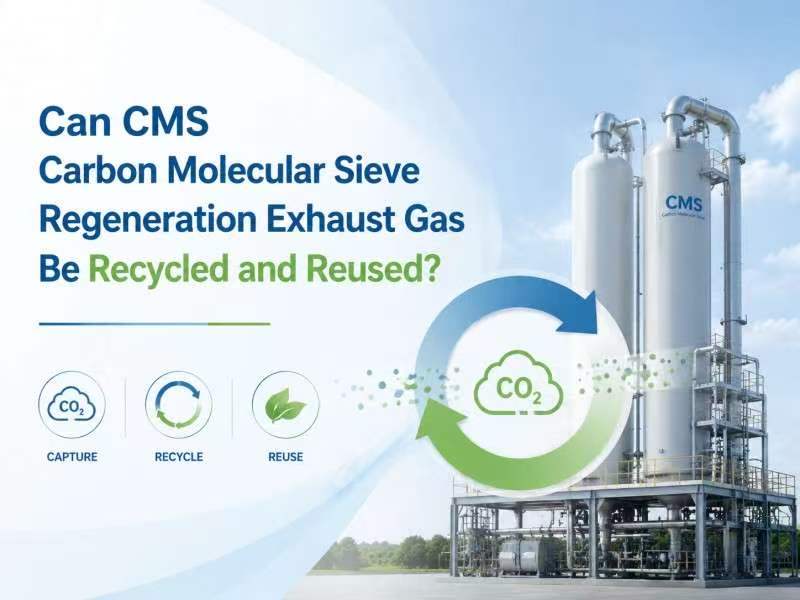
Can Carbon Molecular Sieve Regeneration Exhaust Gas Be Recycled and Reused?
Jun 26, 2026
PSA nitrogen generators are widely adopted across chemical, food, metallurgy and mechanical manufacturing industries for on-site high-purity nitrogen supply. Carbon Molecular Sieve (CMS) serves as the core adsorption material of PSA nitrogen production equipment. During long-term cyclic operation, CMS needs regular regeneration to restore adsorption capacity, which will produce continuous exhaust gas.
Most industrial enterprises directly vent this regeneration exhaust gas to the atmosphere as useless waste gas. However, this conventional disposal method causes a huge waste of oxygen-rich resources. This blog will elaborate on the composition, safety, applicable reuse scenarios and retrofitting costs of CMS regeneration exhaust gas, helping manufacturing plants cut energy costs and achieve low-carbon production.
1. Working Principle of CMS Regeneration & Exhaust Gas Composition
1.1 Core Working Process of PSA Nitrogen Generator
In industrial PSA nitrogen generation systems, CMS selectively adsorbs oxygen, moisture and trace impurities from compressed air, so as to separate nitrogen from air and produce stable high-purity nitrogen for industrial use.
After repeated air adsorption, the micropore structure inside carbon molecular sieve will reach full adsorption saturation. To recover the original adsorption performance, the automatic control system will start two core regeneration procedures: pressure relief and backflow purging. All gas discharged during this regeneration phase is defined as CMS regeneration exhaust gas.
1.2 Exhaust Gas Component Analysis
Different from traditional industrial waste gas containing toxic substances or VOCs, CMS regeneration exhaust gas features ultra-clean components without any hazardous pollutants:
• Main component: Oxygen, with oxygen concentration around 30%
• Secondary components: Water vapor and trace carbon dioxide
• Harmful substance: Zero toxic and corrosive ingredients
Simply put, CMS regeneration exhaust gas is clean oxygen-enriched air rather than real industrial waste gas.
2. Practical Reuse Scenarios for Recycled CMS Regeneration Exhaust Gas
The recovered high-purity oxygen-enriched gas can be applied to multiple on-site industrial processes without complex deep purification treatment, covering most common production links of manufacturing factories:
2.1 Combustion Supporting for Thermal Equipment
The oxygen-rich exhaust gas can replace conventional natural air as combustion-supporting gas for industrial boilers, rotary kilns and heating furnaces. Slightly higher oxygen concentration than ordinary air optimizes fuel combustion efficiency thoroughly, reduces incomplete combustion loss, and effectively cuts overall fuel consumption of thermal equipment.
2.2 On-site Compressed Air Replacement
The treated exhaust gas can substitute expensive compressed air for daily auxiliary production work, including equipment surface purging, workshop dust removal and factory ventilation. It helps enterprises reduce the startup time and power consumption of air compressors.
2.3 Environmental Protection and Aquaculture Applications
After simple dehumidification and filtration treatment to remove residual moisture, the oxygen-rich gas can be directly used for sewage treatment aeration to accelerate microbial decomposition. It is also an ideal oxygen supply source for industrial aquaculture ponds to improve water dissolved oxygen content.
3. Exhaust Gas Recovery Retrofit: Cost & Equipment Impact
Many enterprises worry that adding an exhaust gas recovery system will affect the operation of existing nitrogen generators or bring high renovation costs. In fact, the whole upgrading solution is simple and economical:
Required equipment: Only supporting gas collection pipelines, gas buffer tanks and pressure stabilization control devices are needed
Original equipment modification: No disassembly or structural change for the original PSA nitrogen generator
Operation influence: Zero impact on finished nitrogen purity, nitrogen output and long-term operating stability of molecular sieve
The recovery system runs independently with the original nitrogen production unit, ensuring safe and stable operation of both systems.
4. Conclusion
High-purity CMS carbon molecular sieve regeneration exhaust gas is not disposable waste gas, but a neglected high-value oxygen-enriched industrial resource. Reasonable recycling and reuse brings dual benefits for manufacturing enterprises:
Economic benefit: Cut air compressor power consumption and fuel cost, lower overall production operating expenses
Environmental benefit: Reduce direct gas emission, lower factory carbon footprint, and realize green upgrading of PSA nitrogen production equipment
For factories equipped with medium and large-scale PSA nitrogen generators, installing a supporting exhaust gas recovery system is a low-investment, high-return energy-saving transformation project worthy of priority promotion. Explore our website www.carbon-cms.com to learn more about our products and services.


 Network Supported