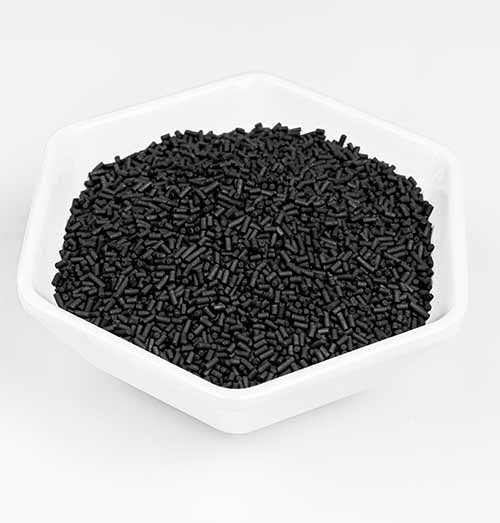
Adsorption and Desorption Process of Carbon Molecular Sieve
Jan 23, 2026
I. Adsorption Process: "Oxygen Capture" Under Pressure
Adsorption is the stage where carbon molecular sieves "capture" impurity gases and enrich nitrogen, with pressure as the core driving force. Industrial applications usually adopt a double-tower alternating mode to ensure continuous gas production, and the single-tower adsorption process can be divided into three steps:
1. Feed Pretreatment: Purifying the Air "Raw Material"
Air is not a pure substance; it contains impurities such as oil, water, and dust, which can clog the micropores of carbon molecular sieves and shorten their service life. Therefore, compressed air first passes through a pretreatment system — an oil remover to eliminate oil stains, a dryer to remove moisture, and a filter to intercept dust — finally obtaining clean and dry compressed air with pressure raised to 6-8 bar, ready for adsorption.
2. Selective Adsorption: Precise "Screening" of Oxygen and Nitrogen
After entering the adsorption tower, the clean compressed air, under pressure, allows small molecules such as oxygen, carbon dioxide, and residual water vapor to quickly diffuse into the micropores of the carbon molecular sieve and be firmly adsorbed on the pore walls. In contrast, nitrogen molecules, due to their slow diffusion rate and weak interaction with the micropores, are barely adsorbed. They flow upward along the bed layer and are finally discharged from the top of the tower as product nitrogen with a purity of 99.9%-99.999%, which is collected and stored.
3. Adsorption Saturation: The "Critical State" Before Switching
As adsorption proceeds, the micropores of the carbon molecular sieve are gradually filled with impurities such as oxygen molecules, and the adsorption capacity reaches saturation. This process usually takes only about 1 minute. At this time, the pressure inside the tower is maintained at the adsorption pressure, and the system automatically triggers a switching command to prepare for the next desorption and regeneration step.
II. Desorption Process: "Regeneration Ritual" After Depressurization
Desorption (also known as desorption) is a key step for carbon molecular sieves to release adsorbed impurities and restore adsorption capacity, with the core logic of "breaking the adsorption equilibrium by depressurization". Similarly, taking a single tower as an example, the desorption process is divided into four steps to ensure thorough regeneration:
1. Pressure Equalization and Depressurization: An Energy-Recycling "Transition Link"
The tower saturated with adsorption stops air intake and is briefly connected (for about 10-30 seconds) to another tower at the end of desorption with lower pressure to achieve pressure equalization. This step not only quickly reduces the pressure of the saturated tower but also recovers part of the pressure energy to boost the pressure of the other tower, balancing efficiency and energy conservation.
2. Desorption and Exhaust: The "Release Channel" for Impurities
After pressure equalization, the saturated tower is connected to the atmosphere through an exhaust valve, and the pressure drops sharply to near atmospheric pressure. At this point, the adsorption equilibrium inside the micropores of the carbon molecular sieve is broken, and the previously adsorbed impurities such as oxygen, carbon dioxide, and water vapor desorb from the pore walls and are discharged out of the tower with the air flow (the exhaust gas is mainly oxygen and can be directly emitted).
3. Flushing Enhancement: A "Key Step" for Deep Cleaning
To thoroughly remove residual impurities in the tower and avoid affecting the next adsorption effect, the system introduces 5%-15% of product nitrogen to backwash the adsorption tower. High-purity nitrogen can displace the residual oxygen-containing exhaust gas in the tower and further activate the adsorption activity of the carbon molecular sieve.
4. Pressure Boosting Preparation: Preparing for the Next Cycle
After flushing, the pressure of the desorbed tower is raised back to the adsorption pressure through re-pressure equalization or supplementary compressed air, completing the entire regeneration process. It then waits to switch with the other tower and enters the next adsorption cycle.
Any interestes or questions ,welcome to visit us at www.carbon-cms.com.


 Network Supported