Home

Blog

Blog

  • Bottled Nitrogen vs On-site PSA Nitrogen Generator: Which Is Better for Your Business
    Bottled Nitrogen vs On-site PSA Nitrogen Generator: Which Is Better for Your Business Aug 19, 2026
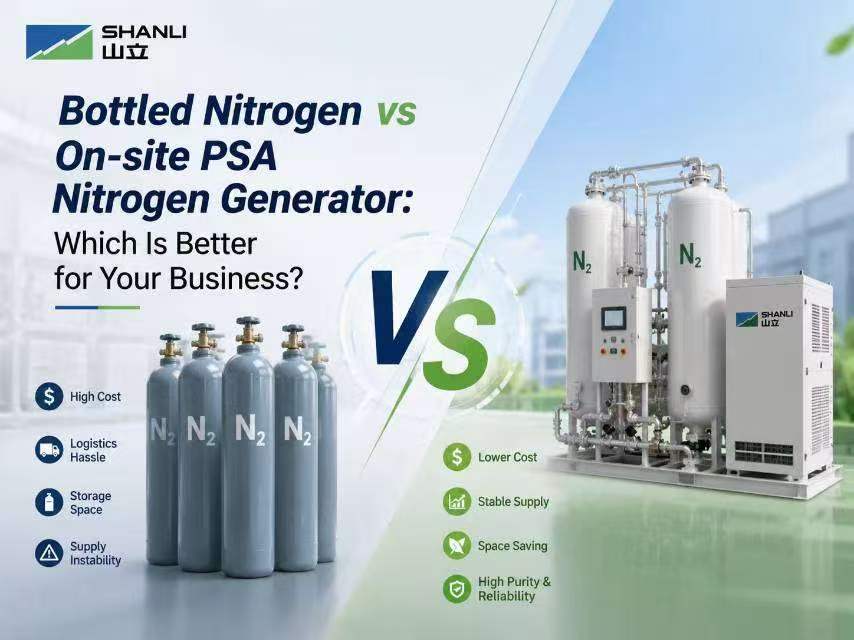
      Industrial nitrogen supply mainly relies on two mainstream solutions: bottled nitrogen and on-site PSA nitrogen generation. Each solution has its unique advantages and applicable scenarios. Many factory managers and system integrators struggle to select the most cost-effective and reliable gas supply mode according to their production conditions. This article makes an objective, all-round comparison of the two nitrogen supply methods in terms of cost, stability, safety and applicability, helping enterprises make rational decisions.   1. Cost Comparison   1.1 Bottled Nitrogen  Advantage: No upfront equipment investment, no equipment maintenance costs. For enterprises with extremely low gas consumption or temporary experimental production, bottled nitrogen avoids idle asset waste and saves early equipment deployment costs. Disadvantage: Long-term comprehensive cost is high. Continuous gas purchase, cylinder rental, transportation and manual replacement fees form recurring expenditure. Gas prices are easily affected by market fluctuations and supplier adjustments, leading to uncontrollable long-term operating costs.   1.2 PSA Nitrogen Generator Disadvantage: One-time upfront investment is required for equipment purchase and installation, which raises the initial project budget threshold for enterprises. Advantage: The long-term operating cost is extremely low. The equipment only consumes electric energy and compressed air during operation. After recovering the upfront investment, enterprises can obtain almost free stable nitrogen supply, completely getting rid of reliance on external gas suppliers.     2. Gas Supply Stability & Flexibility   2.1 Bottled Nitrogen Advantage: The nitrogen purity of finished cylinders is fixed and high, with stable single-batch gas quality. It is suitable for ultra-high-purity gas demand scenarios with no need for parameter adjustment, and no professional equipment debugging is required on site. Disadvantage: The gas supply is dependent on external logistics and suppliers. It is easy to face gas shortage, delayed delivery and production interruption during peak seasons or supplier stock shortages. In addition, the purity and pressure of different batches of bottled gas have subtle deviations, which is not conducive to high-standard continuous production.   2.2 PSA Nitrogen Generator Disadvantage: The gas purity and pressure need regular minor debugging according to ambient temperature and equipment operation status, requiring basic daily inspection and maintenance. Advantage: It supports 24/7 uninterrupted on-demand gas supply. The nitrogen purity and pressure can be freely adjusted within the equipment range, matching different production process requirements. The gas quality is consistent and not affected by external supply chains.     3. On-site Safety & Operation Management   3.1 Bottled Nitrogen Advantage: No professional equipment operation training is required, no mechanical failure risks. The whole process is simple and labor-saving for short-term and intermittent gas use. Disadvantage: A large number of high-pressure gas cylinders stored in the workshop occupy production space. Frequent handling and replacement of heavy cylinders bring potential high-pressure safety hazards and increase labor pressure.   3.2 PSA Nitrogen Generator Disadvantage: The equipment occupies a certain workshop area and requires regular inspection of air compressors, filters and core consumables. Advantage: Fully automatic unmanned operation after commissioning, no frequent manual operation. It eliminates hidden dangers of high-pressure cylinder storage and handling, making the production site safer and more standardized.     4. Applicable Scenario Analysis   4.1 Choose Bottled Nitrogen If: Your factory has low gas consumption, discontinuous and intermittent production, short-term pilot projects, or ultra-high-purity nitrogen demand that does not require parameter adjustment.   4.2 Choose PSA Nitrogen Generator If: You need long-term, stable, and continuous gas supply, including oil & gas, chemical, food packaging, electronic manufacturing, mining and other industrial scenarios. It is the optimal solution for mass and standardized production.     Final Conclusion Bottled nitrogen is flexible and zero-investment in the early stage, suitable for small and intermittent gas demand. However, for most industrial enterprises with long-term and stable production, on-site PSA nitrogen generators have absolute advantages in cost control, gas supply stability and on-site safety. The stable operation of PSA nitrogen equipment is inseparable from high-quality carbon molecular sieve (CMS), which is the core consumable to ensure long-term stable and high-purity nitrogen production.   If you need high-quality carbon molecular sieve for new equipment assembly or old equipment replacement to optimize your PSA nitrogen system performance, feel free to contact our professional team for technical support and customized quotation.   Please click www.carbon-cms.com. Reach out to us if you need further guidance for carbon molecular sieve application.   
  • Key Signs That You Need to Replace Carbon Molecular Sieve
    Key Signs That You Need to Replace Carbon Molecular Sieve Aug 28, 2026
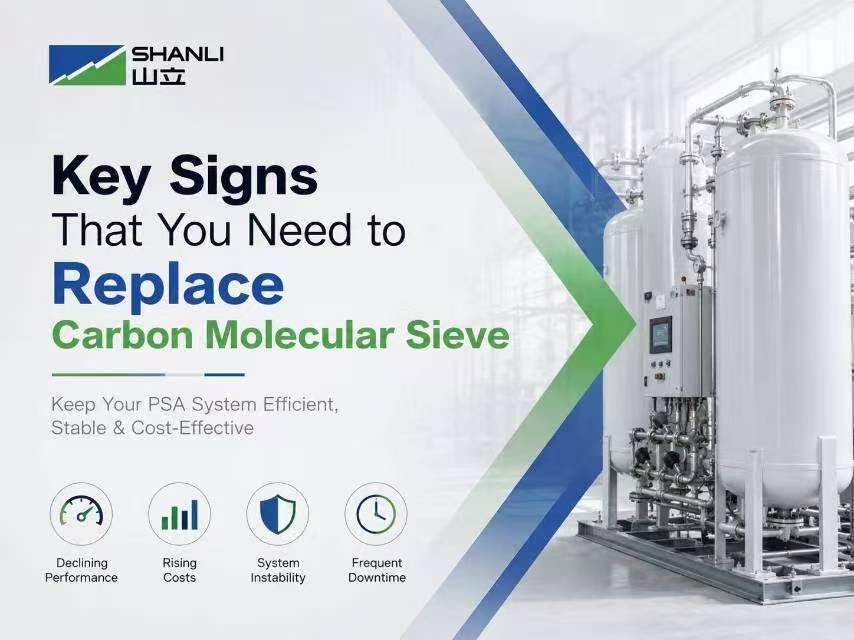
    A carbon molecular sieve serves as the core functional consumable of PSA nitrogen generators. It directly determines the nitrogen purity, gas production volume and long-term operational stability of the entire equipment.   Many factory operators only adjust equipment parameters when encountering unstable gas production, ignoring that aging and damaged CMS is the root cause. When the carbon molecular sieve loses its working performance, simple debugging and maintenance cannot restore the original operating effect.   This article explains why CMS needs regular replacement, and summarizes practical on-site signals to help you accurately judge the replacement timing.     1.Why Carbon Molecular Sieve Needs Replacement  The working principle of PSA nitrogen generation relies on the selective adsorption performance of carbon molecular sieve. Under cyclic pressure changes, CMS adsorbs oxygen, moisture and trace impurities in compressed air to separate and purify nitrogen.   After long-term cyclic operation, two irreversible problems will occur inside the CMS: adsorption activity fatigue and micropore blockage. Long-term pressure impact will gradually weaken the oxygen adsorption capacity of the molecular sieve. Meanwhile, trace oil vapor, moisture and dust in the air system will continuously deposit on the CMS surface and internal micropores, causing permanent blockage.   This kind of performance degradation cannot be repaired by conventional regeneration, parameter adjustment or daily maintenance. Once the overall activity of the carbon molecular sieve declines, only replacement can restore the stable working efficiency of the PSA nitrogen system.     2.Key Signs That CMS Requires Replacement The following abnormal conditions are typical early and mid-term failure signals of carbon molecular sieve. If your PSA nitrogen generator has the following problems after eliminating equipment failure and pipeline faults, it means the CMS has aged and needs to be replaced in time.   2.1 Continuous Decline in Nitrogen Purity The most intuitive signal. Under standard working pressure and normal air intake, the nitrogen purity cannot reach the factory design standard. Even by adjusting cycle parameters and increasing air intake, the high target purity cannot be stably maintained, and the oxygen content in finished nitrogen continues to rise.   2.2 Obvious Reduction in Nitrogen Production With the same air intake volume and operating parameters, the effective nitrogen output drops significantly. The equipment cannot meet the factory’s daily gas demand, and the production efficiency decreases obviously.   2.3 Increased Compressed Air Consumption To maintain the original nitrogen purity and output, the system needs to consume more compressed air than before. The air-nitrogen conversion ratio deteriorates seriously, resulting in increased energy consumption and operating costs.   2.4 Unstable Purity with Frequent Fluctuations The nitrogen purity fluctuates up and down randomly during continuous operation. The system cannot maintain a stable gas quality state, which cannot meet the requirements of standardized and continuous industrial production.   2.5 Visible CMS Powdering and Dust Discharge After long-term pressure impact, part of the CMS particles are crushed and powdered. Obvious black powder can be found in the exhaust port, silencer or filter element. Severe powdering indicates that the CMS structure is damaged and loses stable adsorption performance.   2.6 Long Service Life with Overall Performance Attenuation Carbon molecular sieve has a stable service cycle. If the equipment has been running continuously for many years, and the above multiple abnormal signals appear at the same time after routine maintenance, it means the CMS has reached the replacement cycle.     Conclusion Most PSA nitrogen system operating problems are ultimately caused by aging and failed carbon molecular sieve. Timely judging the replacement signals and replacing CMS in advance can avoid unstable production, excessive energy consumption and unplanned shutdown losses.   High-quality carbon molecular sieve ensures long-term stable gas production, consistent nitrogen purity and lower operating costs for your PSA equipment. Adopting premium carbon molecular sieve can maintain stable operating conditions effectively and extend the overall service life of the molecular sieve.   Important Note: Before deciding to replace the carbon molecular sieve, please ensure that your refrigeration air dryer, precision filters, and activated carbon oil removal filters are all operating properly. If the upstream issues of excessive oil and moisture content in the compressed air are not resolved, any newly installed carbon molecular sieve will face rapid performance degradation and a significantly shortened service life. Addressing the root cause of CMS contamination is just as critical as the replacement itself.   If you need reliable carbon molecular sieve for equipment replacement or project supporting, feel free to contact our professional team for technical support and customized quotation. Please click www.carbon-cms.com.  
  • PSA vs Membrane Nitrogen Generator: Which One Should You Choose for Your Plant
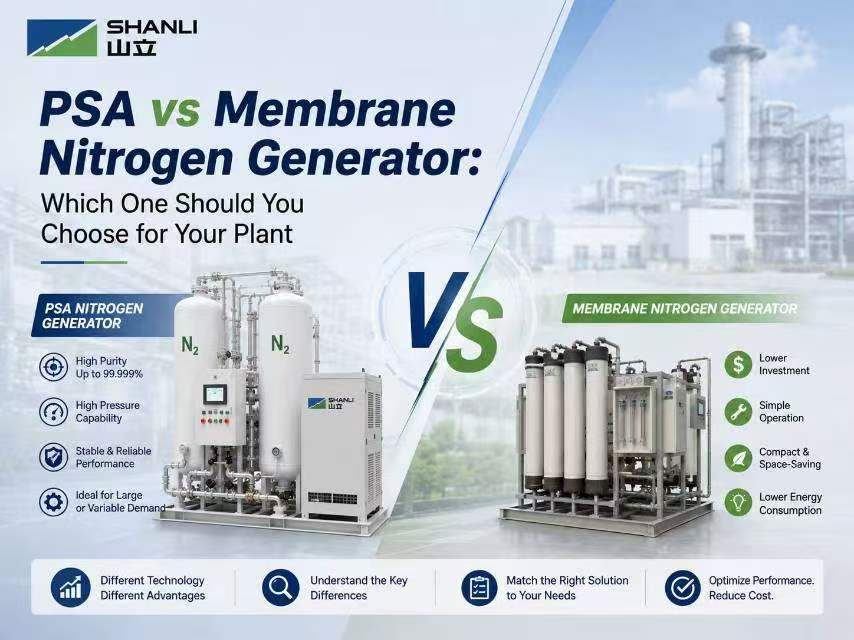
    PSA vs Membrane Nitrogen Generator: Which One Should You Choose for Your Plant Aug 20, 2026
      On-site nitrogen generation has become the mainstream choice for modern industrial gas supply. The two most widely adopted technical solutions are PSA (Pressure Swing Adsorption) nitrogen generation and membrane nitrogen generation.   Many buyers and system integrators misunderstand that membrane technology is outdated or eliminated. In fact, both technologies are mature and coexist in the market, with their unique working principles, advantages and targeted application scenarios. Choosing the right solution according to actual production needs is the key to balancing cost and operational efficiency.   1. Working Principle Difference   1.1 PSA Nitrogen Generator PSA nitrogen generation relies on carbon molecular sieve (CMS) as the core filter material. Under variable pressure conditions, CMS selectively adsorbs oxygen, moisture and impurity gases in compressed air, allowing nitrogen to pass through and be collected. It realizes gas separation through periodic pressure adsorption and desorption cycles.   1.2 Membrane Nitrogen Generator The core component is hollow fiber membrane modules. It adopts physical permeation separation without any adsorbent consumables. Compressed air enters the membrane fibers; fast-permeating gases such as oxygen, water vapor and carbon dioxide penetrate the membrane wall and are discharged. Slow-permeating nitrogen is retained and collected to form finished nitrogen gas.     2. Membrane Nitrogen   2.1 Objective Advantages Membrane nitrogen technology is not obsolete equipment. It features simple structure, no moving parts, no valve switching action, and ultra-low failure rate. It can produce qualified nitrogen instantly after startup without preheating or waiting.   The whole machine is compact, vibration-free, easy to install and move, and requires almost no daily maintenance. With low initial investment, it is very suitable for lightweight and intermittent gas demand scenarios.   2.2 Inherent Limitations Restricted by physical permeation principles, membrane systems have a fixed purity ceiling. The stable nitrogen purity range is 90%–98%. It is difficult and extremely energy-consuming to achieve nitrogen purity above 99.5%.   In high-temperature and high-humidity environments, membrane permeability decreases, resulting in reduced gas production and unstable purity. In addition, membrane components have natural performance attenuation after long-term operation.     3.PSA Nitrogen   3.1 Objective Advantages PSA PSA nitrogen generators have ultra-wide purity adjustment range, stably covering 95%–99.999% nitrogen purity. It fully meets high-standard production demands such as chemical inerting, electronic manufacturing, food fresh-keeping and oil & gas explosion-proof.   Supported by high-quality carbon molecular sieve, PSA systems feature strong anti-interference ability, stable long-term operation, unaffected by ambient temperature and humidity, and excellent consistency of outlet gas quality.   3.2 Inherent Limitations PSA PSA equipment has a relatively complex system with air compression, filtration and adsorption tower modules, requiring a certain installation space. Regular inspection and replacement of filter elements and CMS consumables are needed. Compared with membrane equipment, it has slightly higher daily maintenance requirements and initial investment costs.     4.Scenario-based Selection Guide   4.1 Choose Membrane Nitrogen Generator If: Low and intermittent nitrogen consumption; Required nitrogen purity ≤ 98%; Limited on-site space, mobile or outdoor working conditions Unmanned long-term standby use with minimal maintenance demand   4.2 Choose PSA Nitrogen Generator If: Long-term, continuous and stable industrial gas demand; Nitrogen purity ≥ 99% (especially high purity above 99.9%); Strict requirements for gas quality stability and production consistency; Industrial scenarios such as petrochemical, electronics, new energy and mining.     Final Conclusion There is no absolute superior or inferior between PSA and membrane nitrogen generation technologies. Membrane technology is the optimal solution for low-purity, lightweight, and low-maintenance scenarios. PSA nitrogen generation is the mainstream industrial solution for high-purity, high-stability and long-term continuous production.   The stable performance of PSA equipment is closely related to the quality of carbon molecular sieve. High-quality CMS ensures long-term stable adsorption efficiency, consistent gas purity and extended service life of the whole system.   If you are looking for high-performance and stable carbon molecular sieve for PSA nitrogen equipment assembly or replacement, welcome to contact our team for professional technical support and customized quotation.   Please click www.carbon-cms.com. Reach out to us if you need further guidance for carbon molecular sieve application.   
  • Practical Advice For Carbon Molecular Sieve Storage & Managemen
    Practical Advice For Carbon Molecular Sieve Storage & Managemen Aug 14, 2026
      Many storage-related issues will negatively affect the performance of carbon molecular sieve (CMS). Proper storage and daily management help preserve adsorption capacity and extend service life. We have sorted out universal practical tips for global PSA nitrogen operators, equipment manufacturers and distributors.    1.Keep Away From Moisture Carbon molecular sieve is highly hygroscopic. Once it absorbs water vapor in the air, its separation performance will decline significantly.  Keep CMS sealed in original packaging before use. Do not open the bags in humid environments.  Avoid storing goods outdoors or in areas prone to rain, dew and water splashing.     2.Avoid Exposure To Oil Vapor & Contaminants  Oil mist, volatile chemical gas and dust can cause irreversible contamination to carbon molecular sieve.  The warehouse should be kept clean. Do not place CMS together with lubricants, solvents or corrosive materials.  Prevent heavy dust accumulation on packaging.      3.Reasonable Warehouse Environment  Store CMS indoors in cool and dry conditions, away from high temperature and direct sunlight.  The recommended storage temperature ranges from 15℃ to 30℃, with relative humidity below 70%RH.  The storage space needs good ventilation, with stable ambient temperature.  Keep the ground dry. Place pallets under CMS packages instead of directly stacking goods on the floor.      4.Stacking & Handling Notes  Do not excessively stack packages to prevent bag breakage and material powdering caused by extrusion.  Avoid violent throwing during loading and unloading. Broken packages will lose sealing protection quickly.      5.Short-term Storage After Opening Packaging  If you have opened the packaging but cannot fill the PSA vessel immediately:  Seal the opening tightly again. Arrange loading as soon as possible.  Do not leave carbon molecular sieve exposed to atmosphere for a long time.     Final Reminder  Standardized storage is a low-cost way to protect your investment in carbon molecular sieve. If you have any questions about CMS handling before loading, feel free to contact our team for support.    Please click www.carbon-cms.com. Reach out to us if you need further guidance for carbon molecular sieve application. 
  • SHANLI In-house Laboratory: What Testing Services We Offer For PSA Nitrogen Partner
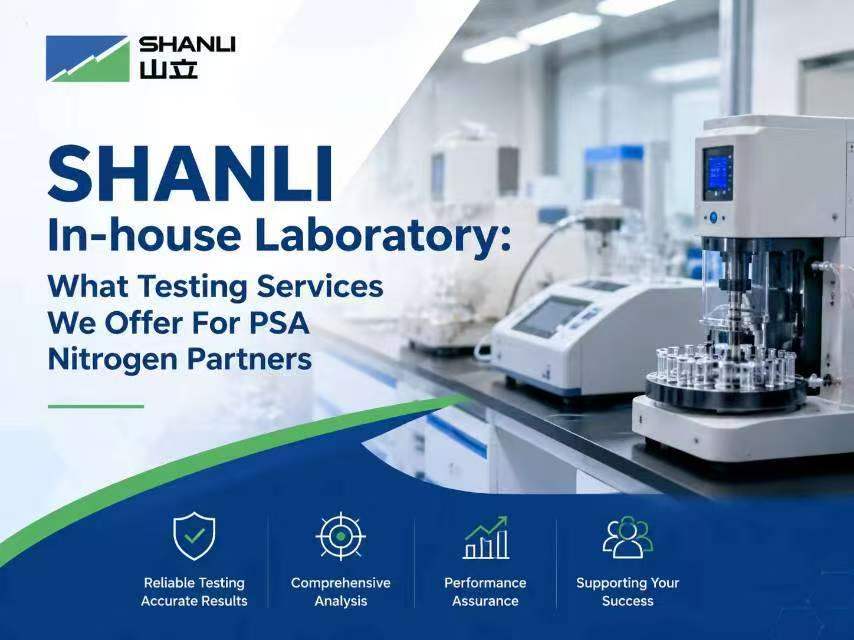
    SHANLI In-house Laboratory: What Testing Services We Offer For PSA Nitrogen Partner Aug 07, 2026
      Many carbon molecular sieve suppliers only provide finished products with basic datasheets. At Shanli, our in-house testing lab is an important part of our technical service for OEM manufacturers, system integrators and end-users of PSA nitrogen generators.   We do not just sell carbon molecular sieve particles. Our laboratory carries out a full set of professional tests to verify CMS real-world performance, simulate your actual working conditions, and support your product development and equipment upgrading.     1.Our core lab testing capabilities   1.1 Dynamic and Static Adsorption Testing We test static and dynamic adsorption capacity of every batch of CMS. This helps us confirm oxygen-nitrogen separation performance and guarantee consistent adsorption capability batch after batch.   1.2 Performance Testing Under Different Adsorption Pressures PSA systems run under various working pressure ranges. Our lab simulates different adsorption pressure environments, to check how our carbon molecular sieve performs under your target operating pressure. This supports you for adsorber vessel design and parameter tuning.   1.3 Performance Testing Under Varying Ambient Temperature Ambient temperature greatly affects PSA nitrogen output and purity. We run tests across different temperature conditions, simulating tropical high-temperature sites or low-temperature working scenarios for your overseas projects.   1.4 Air Consumption Testing Under Different Conditions Air consumption is a key economic indicator for PSA nitrogen plants. We test air-to-nitrogen ratio under multiple working setups. The test data can help you optimize your equipment design and reduce customers’ operating cost.   1.5 Process Compatibility Testing For PSA Equipment We perform full process compatibility testing matching real PSA equipment workflow. Before large-volume delivery, we can simulate your PSA cycle parameters to verify whether our carbon molecular sieve fits your machine perfectly. This greatly reduces risks for your new-machine trial or replacement projects.     2.What value can these lab services bring to you?   2.1 Reliable batch consistency Every batch is tested, you will receive complete test reports together with goods.   2.2 Customized technical support If you have special working conditions, we can run targeted lab simulation tests for your project.   2.3 Lower trial-and-error risk Verify performance in our lab first, before you do expensive on-site machine testing.   2.4 Data for your equipment R&D Provide real test data for your new PSA equipment development.   Whether you need standard-grade carbon molecular sieve, or require custom development for special PSA working scenarios, our lab team can offer you solid testing support.   If you want to learn more about our laboratory testing service, or require test support for your PSA nitrogen project, please feel free to contact our technical team.   
  • Common Pitfalls in CMS Procurement & Mitigation Strategies: A Selection Guide for PSA Nitrogen Generation Adsorbents
    Common Pitfalls in CMS Procurement & Mitigation Strategies: A Selection Guide for PSA Nitrogen Generation Adsorbents Jul 24, 2026
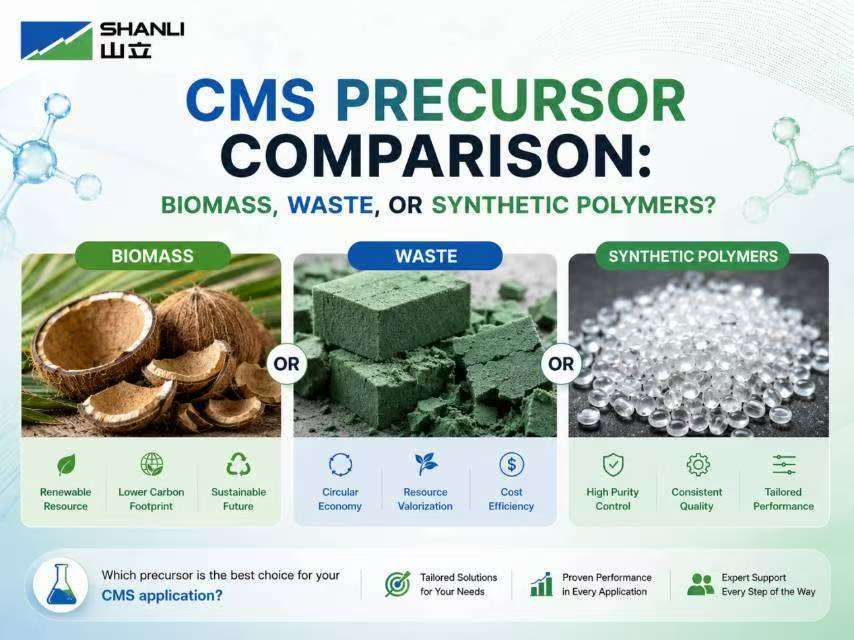
    Carbon Molecular Sieve serves as the core adsorbent inside PSA nitrogen generators, directly determining nitrogen output stability, energy consumption and long-term operational safety of on-site nitrogen generation systems.   Many purchasers and system engineers rush into purchasing decisions relying merely on quotations or basic laboratory data without comprehensive evaluation. Improper CMS selection may trigger reduced nitrogen purity, frequent equipment shutdowns, rising maintenance costs and even potential operational safety hazards.   This article outlines six prevalent pitfalls in CMS procurement and delivers practical evaluation criteria for buyers of PSA nitrogen generation equipment.     1. Prioritizing Upfront Price While Ignoring Long-term Operating Costs It is a widespread pitfall for purchasers to prioritize low pricing when comparing carbon molecular sieves. Nevertheless, comprehensive operating costs ought to be the primary evaluation benchmark. CMS with inferior separation efficiency features a poor air-to-nitrogen ratio, consuming more compressed air throughout its service life and increasing power load on air compressors. Accumulated extra electricity bills over several years will far exceed the upfront savings from choosing low-cost adsorbents.   In addition, low-grade CMS suffers faster performance degradation and shorter service life. Frequent shutdowns for replacement disrupt continuous production and incur extra labor expenses and production downtime losses. Instead of simply comparing unit prices, enterprises should calculate total costs based on nitrogen output, air-to-nitrogen ratio and expected service lifespan.     2. Neglecting Mechanical Strength and Anti-Pulverization Performance Some purchasers only focus on nitrogen separation indicators while overlooking the physical properties of CMS pellets. Subjected to continuous air flow impact, alternating pressure and tank vibration, carbon molecular sieves with low crush strength will gradually pulverize. Circulating carbon powder blocks filters and control valves, elevates system pressure drop and impairs nitrogen supply quality.   Most Shanli CMS models achieve a crush strength above 38 N, while high-end customized versions can exceed 60 N. Superior mechanical strength effectively prevents pulverization, which is particularly critical for marine nitrogen generation systems and underground nitrogen injection equipment under persistent vibration.     3. Deploying General-Purpose CMS Directly in Harsh Working Conditions Without Customized Adaptation Many users assume one universal carbon molecular sieve fits all application scenarios. In fact, CMS formulations are optimized for specific operating environments. Standard industrial-grade CMS lacks sufficient tolerance to high humidity, salt spray and frequent start-stop cycles. When directly deployed on vessels, underground mines or other severe working sites, its micropores will be quickly clogged by moisture and contaminants, leading to rapid deterioration of nitrogen separation efficiency.   Working conditions including vibration intensity, ambient humidity, target nitrogen purity and operation continuity shall be clarified in advance. We are capable of developing customized CMS tailored to specific project requirements.     4. Overlooking Batch Consistency of Carbon Molecular Sieves Unstable batch quality remains a prominent issue for certain manufacturers. One batch of products may deliver satisfactory performance, whereas the subsequent batch sees obvious nitrogen output decline. Fluctuating CMS performance forces operators to repeatedly adjust parameters of PSA equipment and undermines stable nitrogen supply.   Shanli implements standardized full-process production monitoring starting from raw material screening. Strict sampling tests are conducted for every batch to guarantee consistent separation performance and eliminate risks arising from quality discrepancies across batches.     5. Lack of Awareness Regarding Raw Material Differences for CMS Production Raw material quality fundamentally defines the microstructure of carbon molecular sieves. Some manufacturers adopt biomass, waste or recycled feedstocks. Such materials feature high ash content, tend to form irregular pore structures and generate excessive mesopores. CMS manufactured from these feedstocks delivers unstable adsorption-desorption characteristics, with efficiency dropping sharply after short-term operation.   Shanli collaborates with material suppliers to develop resin-based foam precursors exclusively for CMS production. Low ash content and outstanding consistency support stable micropore formation. Under identical filling volume, it can produce more nitrogen than conventional carbon molecular sieves, with highly overlapping adsorption and desorption curves and stable cyclic performance.     6. Placing Bulk Orders Without Preceding Laboratory Simulation Tests Numerous buyers confirm large orders solely based on static data provided by suppliers. The technical parameters offered by manufacturers are usually obtained under ideal laboratory conditions. Any deviation in on-site temperature, pressure and air pretreatment status will alter actual gas production results. If CMS fails to meet purity requirements after tank filling, modification and replacement will cause substantial financial losses.   Laboratory testing can simulate real operating conditions, optimize PSA parameters and verify matching performance, enabling customers to fully assess practical CMS capacity prior to bulk procurement.     7.Select Reliable Carbon Molecular Sieves to Mitigate Procurement Risks To avoid the pitfalls mentioned above, partners should select suppliers with mature core technologies, rigorous quality control and comprehensive technical support. Qualified CMS suppliers shall deliver consistent product performance and provide professional guidance for application commissioning.   Further Reading: Five Core Advantages of Shanli Carbon Molecular Sieve: Reliable Adsorbent for On-site PSA Nitrogen Generation     8.Conclusion Carbon molecular sieve procurement constitutes a long-term investment rather than a one-off transaction. Comprehensive evaluation covering service life, air-to-nitrogen ratio, mechanical strength, batch stability and raw material foundation carries far greater weight than merely chasing low prices. Beyond premium CMS products, Shanli also provides laboratory simulation testing, on-site equipment commissioning and sample supply services to help customers achieve optimal nitrogen generation efficiency.   Feel free to contact us if you require performance data, sample testing or customized carbon molecular sieve solutions for your PSA nitrogen generation project.
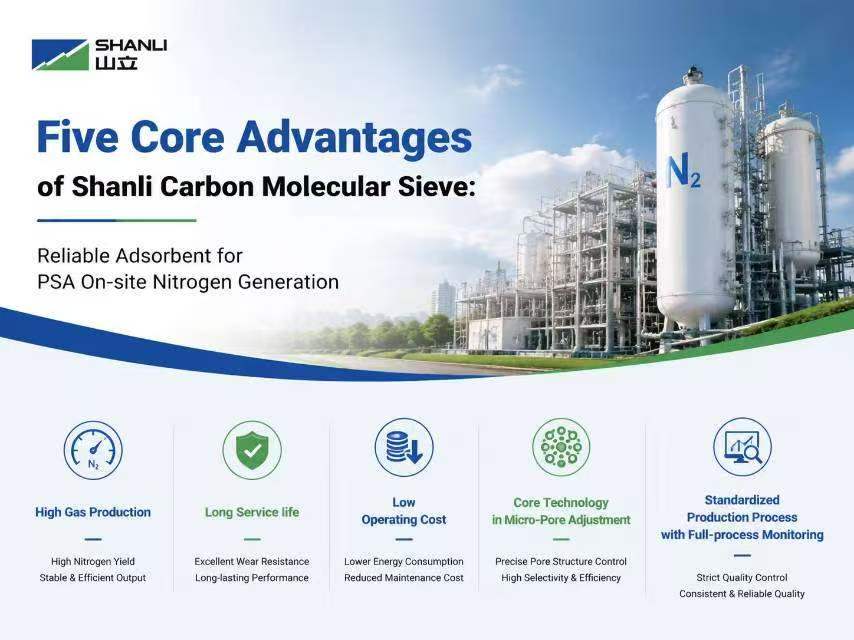
  • Five Core Advantages of Shanli Carbon Molecular Sieve: Reliable Adsorbent for PSA On-site Nitrogen Generation
    Five Core Advantages of Shanli Carbon Molecular Sieve: Reliable Adsorbent for PSA On-site Nitrogen Generation Jul 23, 2026
      Carbon molecular sieve acts as the core adsorbent for PSA nitrogen generators, directly determining nitrogen output, purity stability, operating expenditure and overall service life of gas production systems.   Shanli carbon molecular sieve is widely adopted across semiconductor, petrochemical, mining and marine industries for on-site nitrogen generation. Supported by proprietary material technology, strict manufacturing control and verified performance data, Shanli CMS stands out amid competitive alternatives. This article elaborates on five core advantages of Shanli CMS, together with our comprehensive supporting technical services for partners and end users.     1. Extended Service Life with Strong Anti-pulverization Performance Under standard air pretreatment conditions, Shanli carbon molecular sieve features a typical service life ranging from 5 to 10 years. Many customers report even longer operating cycles when equipment and air source conditions are well maintained.   Most Shanli CMS grades achieve a single-pellet crush strength above 38 N, while high-performance customized models can reach over 60 N. Superior mechanical strength effectively reduces particle friction and pulverization caused by continuous airflow impact, vibration and pressure fluctuation, making our products suitable for challenging scenarios including underground mines and ocean-going vessels. Furthermore, customized CMS formulations are available to match various complicated working environments.     2. Lower Long-term Operating Costs Backed by Optimized Air-to-Nitrogen Ratio The air-to-nitrogen ratio is a decisive indicator that governs power consumption of PSA nitrogen systems. Shanli CMS delivers outstanding separation efficiency, cutting compressed air consumption and reducing electricity expenses for air compressors. Longer service intervals also minimize downtime and maintenance costs caused by frequent adsorbent replacement.   Take SLCMS-USP/L as a reference, tested under 0.7 MPa and 20 ℃ : For 99.99% purity nitrogen: 110 Nm³ nitrogen per ton of CMS per hour, air-to-nitrogen ratio at 3.5 For 99.9% purity nitrogen: 150 Nm³ nitrogen per ton of CMS per hour, air-to-nitrogen ratio at 2.9     3. Proprietary Micropore Modulation Technology Micropore structure dominates the oxygen-nitrogen diffusion separation process. Shanli has developed independent micropore modulation technology to precisely adjust pore size and pore distribution of carbon molecular sieve.   With optimized microstructure, Shanli CMS achieves uniform micropores without redundant mesopores. Its adsorption and desorption curves show high coincidence, ensuring stable cyclic separation performance. We are capable of adjusting micropore characteristics according to customers' targeted nitrogen purity requirements, developing tailored CMS grades for different nitrogen production specifications.     4. Standardized Full-process Production Monitoring Based on Premium Raw Materials Consistent product quality relies on strict control from raw material selection to finished product inspection.   Shanli cooperates with suppliers to develop exclusive resin-based foam precursors specially manufactured for CMS production. Unlike biomass materials, waste materials or recycled feedstock, this premium raw material features low ash content, high consistency and great development potential. High-quality precursors guarantee stable micropore formation during production.   Our quality management covers the whole workflow: raw material screening, pellet forming, carbonization, activation, modification and random sampling inspection. Rigorous full-process monitoring effectively avoids inconsistent performance between batches, ensuring stable quality for every shipment of carbon molecular sieve.     5. High Nitrogen Output Capacity Benefiting from premium raw materials and mature micropore regulation technology, Shanli carbon molecular sieve delivers higher nitrogen output under the same filling volume compared with conventional CMS.   It can maintain stable nitrogen purity even under relatively high load, supporting large-flow PSA nitrogen generators. This advantage helps equipment manufacturers design more compact nitrogen systems or boost gas production capacity without expanding tower size.     6. Complementary Professional Technical Support Beyond high-performance CMS products, Shanli provides complete technical services to maximize system efficiency for PSA nitrogen equipment manufacturers and factories requiring adsorbent replacement.   6.1 In-house laboratory testing We can simulate customers' actual operating conditions, adjust technical parameters and explore the optimal matching scheme to bring out the full potential of Shanli CMS.   6.2 On-site equipment tuning service Professional technical support is available to optimize operating parameters of PSA nitrogen generators and achieve stable target nitrogen output.   6.3 Sample supply Samples are offered for preliminary performance verification before bulk orders.     7.Conclusion Selecting suitable carbon molecular sieve is vital for sustainable and economical on-site nitrogen production. With long service life, favorable operating cost, proprietary micropore modulation technology, standardized full-process manufacturing and high nitrogen output, Shanli CMS provides reliable adsorption solutions for diversified PSA nitrogen projects. Coupled with laboratory testing and on-site technical services, we support partners throughout the whole project cycle.   If you want to learn more details or need sample testing, please feel free to contact us.
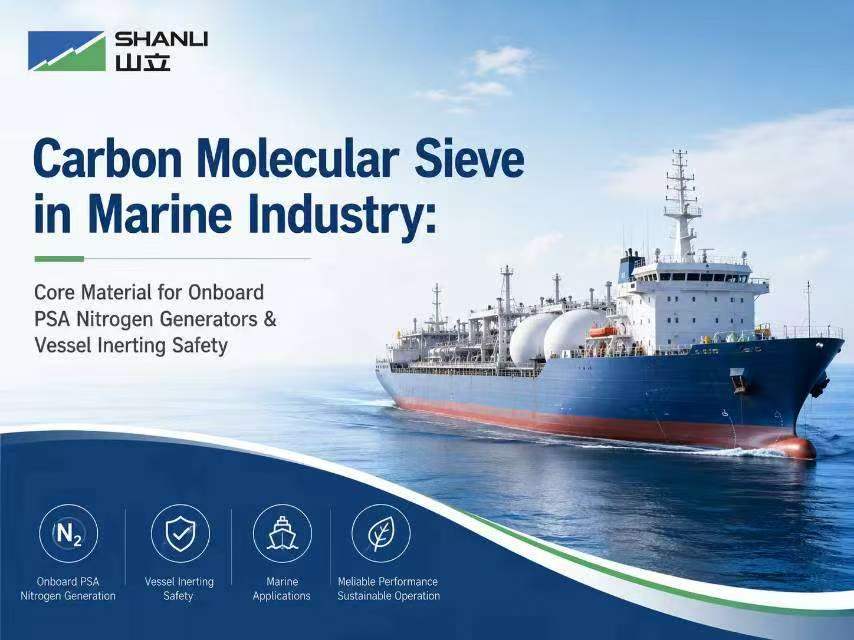
  • Carbon Molecular Sieve in Marine Industry: Core Material for Onboard PSA Nitrogen Generators & Vessel Inerting Safety
    Carbon Molecular Sieve in Marine Industry: Core Material for Onboard PSA Nitrogen Generators & Vessel Inerting Safety Jul 17, 2026
      Oil tankers, chemical carriers, LNG vessels and offshore FPSOs are required to equip inert gas systems in compliance with IMO maritime regulations to mitigate flammable hazards onboard. Traditional flue gas inerting systems suffer from sulfur corrosion and unwanted contaminants. Onboard PSA nitrogen generators, which produce clean and dry nitrogen directly from ambient air, have become a widely adopted solution. As the core adsorbent enabling nitrogen-oxygen separation, carbon molecular sieve (CMS) determines gas output stability and operational reliability of marine nitrogen generation equipment, which are critical factors affecting voyage safety.      1.Why PSA Nitrogen Is Indispensable for Maritime Operation Safety  Marine vessels operate in enclosed spaces under continuous marine environmental impacts, with limited access to external supplies during long ocean voyages. Flammable vapors accumulated in cargo tanks, residual hazardous media inside pipelines and corrosion risks to hull structures pose persistent threats to navigation safety. Oxygen is the key factor triggering combustion, chemical deterioration and accelerated metal rusting.    Nitrogen features stable chemical inertness and low dew point when properly generated. It can lower oxygen concentration inside confined compartments, form a sustained inert atmosphere and suppress explosion risks.   Different from semiconductor manufacturing demanding ultra-high-purity nitrogen or mining scenarios prioritizing extra-large flow rates, most conventional marine inerting applications (crude oil and chemical carriers) typically require stable nitrogen purity of 95%~99.5%, depending on cargo properties and IMO requirements; for LNG carriers and special chemical transport, higher purity (99.9%~99.99%) may be adopted with additional purification stages. Conventional gas separation materials struggle to maintain steady performance under humid, salt-laden and vibration-prone marine conditions, while dedicated marine-grade CMS can adapt to harsh onboard working environments and sustain reliable separation capacity over long-term cycles.     2.Core Application Scenarios of Marine-grade CMS PSA Nitrogen  CMS-based PSA nitrogen units are widely installed inside engine rooms for continuous gas supply, covering routine navigation, cargo handling and ship maintenance.These application scenarios differ significantly from onshore petrochemical, semiconductor and mining applications in terms of operating conditions and performance priorities.   2.1 Cargo Tank Inerting  This represents the primary application for onboard nitrogen systems. During cargo loading, discharging and sea transit, nitrogen is continuously injected into liquid cargo tanks to reduce internal oxygen levels. The inert atmosphere restrains the formation of explosive hydrocarbon-air mixtures and prevents oxidation and deterioration of carried oil and chemical products.    2.2 Pipeline and Tank Purging Before Maintenance  Prior to dock repair or medium replacement, nitrogen purging displaces flammable residual vapors inside pipelines and storage tanks. It eliminates hidden explosion risks caused by hot work and creates safe operating conditions for onboard technicians.    2.3 Protection for LNG and Cryogenic Equipment  Nitrogen shielding is applied to cryogenic pumps, valves and connecting pipelines on LNG carriers. Dry inert gas avoids frost accumulation, water freezing and oxidative corrosion on low-temperature components, maintaining stable operation of special cryogenic facilities.    2.4 Corrosion Prevention for Enclosed Hull Compartments  Ballast tanks, double-bottom spaces and vacant void compartments can be filled with dry nitrogen. Reduced oxygen and humidity slow electrochemical corrosion of steel structures, extending the service life of the vessel hull.      3.Unique Advantages of Marine-specific CMS for Vessel Working Conditions  Marine operating conditions are far more rigorous than standard onshore industrial environments. Vessels face constant vibration caused by waves, high atmospheric humidity with salt mist, limited maintenance support during long voyages and compact layout constraints within engine rooms. Ordinary industrial CMS is prone to accelerated performance degradation and pulverization under onboard conditions, whereas customized marine-grade CMS delivers targeted adaptability.   3.1 High mechanical strength and anti-pulverization performance  Constant hull swaying and vibration lead to frequent friction and collision between adsorbent particles. Marine CMS features high compressive strength and low wear rate, significantly reducing carbon dust generation. It helps prevent pipeline blockage, abnormal pressure drop and secondary contamination caused by material pulverization.   3.2 Improved tolerance to humidity fluctuation  The marine atmosphere contains abundant moisture and trace salt particles. With properly designed compressed air pretreatment (including drying, coalescing filtration and activated carbon bed for oil vapor removal), optimized pore structure enables marine CMS to significantly delay moisture-induced pore blockage and efficiency degradation within designed tolerance ranges, provided that compressed air pretreatment is properly maintained.   3.3 Stable performance for long-duration continuous operation  Ocean-going vessels may stay at sea for months without port access. Marine-grade CMS maintains stable adsorption-desorption cycling performance under prolonged uninterrupted running conditions, with gradual attenuation within acceptable limits, slowing performance degradation and extending service intervals for adsorbent replacement.   3.4 Optimized air-to-nitrogen ratio for compact onboard layout  Engine room space on ships is extremely limited. Marine CMS achieves favorable nitrogen production efficiency, enabling a more compact PSA tower design, reducing the overall footprint of the nitrogen generation system. The compact design facilitates modular installation and matches space constraints of various vessel types.     4.Risks Brought by Low-quality CMS to Navigation Safety and Operation  Maritime inerting systems bear critical safety responsibilities, and CMS quality directly determines the effectiveness of hazard control onboard. Inferior general-purpose CMS will trigger multiple hidden dangers and economic losses.    Low-grade CMS exhibits poor nitrogen-oxygen selectivity, resulting in unstable nitrogen purity. Insufficient inerting effect makes it difficult to reliably control oxygen concentration inside cargo tanks within safety standards, violating marine inspection requirements and creating explosion hazards. Weak mechanical strength leads to severe pulverization during operation; carbon powder circulates in pipelines, blocking filters, control valves and pneumatically actuated components, disrupting normal nitrogen delivery and increasing maintenance frequency.   Furthermore, inferior CMS lacks resistance to humid marine air. Adsorption capacity declines rapidly in voyage conditions. Unexpected output shortage will interrupt continuous tank inerting. Unplanned shutdowns for CMS replacement interfere with shipping schedules and generate extra maintenance costs for ship operators.      5. Professional CMS Selection Criteria for the Marine Industry  When sourcing CMS for onboard PSA nitrogen generators, ship owners and system integrators shall prioritize marine-oriented indicators rather than relying solely on adsorbent specifications developed primarily for other industries.   First, match nitrogen purity to specific onboard applications. Conventional crude oil and chemical cargo tank inerting typically requires stable purity of 95%~99.5%, varying with cargo flash point and voyage duration; for LNG and certain chemical products, 99.9% or higher may be specified. The focus should be on sustained output capacity.   Second, emphasize compressive strength, wear resistance and anti-pulverization capability to cope with long-term vibration at sea.   Third, evaluate moisture resistance to guarantee stable performance under variable humidity of shipboard compressed air.    Fourth, examine cycle service life and long-term attenuation rate to cut downtime losses from frequent replacement. Lastly, select marine-adapted CMS compatible with compact PSA nitrogen equipment to satisfy installation limits inside vessel engine rooms.      6.Conclusion  Reliable inert gas supply is a fundamental guarantee for navigation safety of modern merchant ships. As the core adsorbent of onboard PSA nitrogen generation systems, marine-grade CMS delivers stable, continuous nitrogen for cargo tank inerting, pipeline purging, cryogenic equipment protection and hull anti-corrosion.    Different from semiconductor CMS optimized for ultra-high purity, petrochemical CMS designed for stable onshore factory operation, and mining CMS oriented toward large-flow continuous inerting with tolerance for frequent start-stop cycles, marine-specific CMS takes vibration resistance, humidity adaptability and long-cycle stability as core strengths. It can continuously adapt to the complicated ocean environment under proper system design and regular maintenance, effectively lowering maritime safety risks and comprehensive operating expenses.   Selecting high-performance marine-grade carbon molecular sieve matching vessel operating conditions is a key measure for shipping enterprises to secure navigation safety, reduce maintenance expenditure and realize standardized hazard prevention onboard.
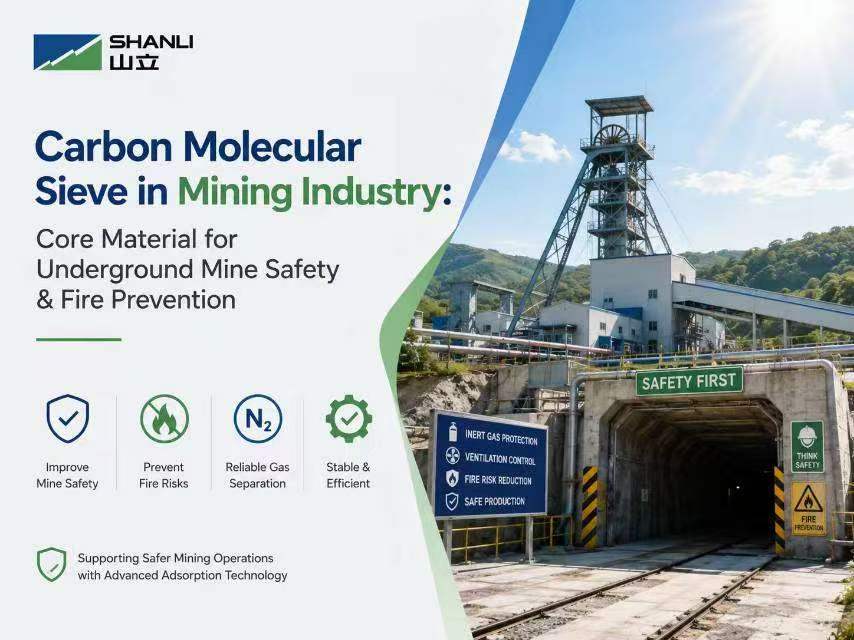
  • Carbon Molecular Sieve in Mining Industry: Core Material for Underground Mine Safety & Fire Prevention
    Carbon Molecular Sieve in Mining Industry: Core Material for Underground Mine Safety & Fire Prevention Jul 17, 2026
    Underground mining operations face persistent safety threats, including coal spontaneous combustion, gas accumulation, and oxygen-induced oxidation in enclosed goafs and abandoned roadways. These hidden hazards severely threaten on-site personnel safety and continuous mining production.   Stable low-cost nitrogen inerting has become a widely adopted and highly reliable technical measure for mine hazard prevention and control. On-site PSA nitrogen generation has gradually replaced traditional liquid nitrogen outsourcing supply, becoming the mainstream gas solution for coal mines and metal underground mines.   As the core functional adsorbent of PSA nitrogen generators, mining-grade Carbon Molecular Sieve (CMS) determines nitrogen production stability, operational cost, and long-term safety protection effects throughout mining scenarios.     1. Why On-Site PSA Nitrogen Is Indispensable for Modern Mining Safety Underground mine environments are characterized by enclosed spaces, humid air, fluctuating air quality, and scattered hazard points. Unlike factory production scenarios, mining safety inerting requires large-flow, continuous, and deployable nitrogen supply rather than ultra-high purity gas. Trace oxygen in closed mining areas is the primary trigger of major safety accidents.   1.1 Goaf Fire Prevention – Suppressing Residual Coal Oxidation Excessive oxygen concentration in goafs leads to slow oxidation and spontaneous combustion of residual coal, causing underground fires and triggering massive mine shutdowns. On-site PSA nitrogen continuously injects large-flow inert gas into mined-out areas, diluting oxygen concentration and breaking the oxidation chain of residual coal. This prevents the occurrence and spread of hidden fires, ensuring safe advancement of working faces.   1.2 Gas Explosion Suppression – Diluting Methane and Combustible Gases Accumulated methane and other combustible gases in confined roadways form explosive mixtures once oxygen content exceeds the safety threshold. PSA nitrogen inerting reduces oxygen concentration in closed areas, shifting combustible gas mixtures out of their explosion limits. It eliminates gas explosion risks during mine maintenance, roadway closure and re-production, cooperating with gas drainage systems to further improve underground safety levels.   1.3 Equipment and Pipeline Corrosion Protection Oxygen and moisture jointly accelerate corrosion of underground pipelines, ventilation equipment and mining auxiliary facilities, increasing equipment maintenance frequency and operational costs. Dry nitrogen purging displaces humid oxygen-containing air from enclosed spaces, slowing oxidative corrosion of metal components, extending equipment service life and reducing unplanned downtime caused by pipeline leaks and equipment failures.     2. Core Application Scenarios of Mining-Grade CMS PSA Nitrogen CMS-based PSA nitrogen generation systems are widely deployed in ground fixed nitrogen stations and underground mobile nitrogen injection devices, covering full-cycle safety protection and auxiliary operation links in underground mining.  Its core application scenarios have distinct mining-specific characteristics, with significant differences in operating conditions compared to petrochemical and semiconductor applications.   2.1 Goaf Inerting and Spontaneous Combustion Prevention This is the largest and most critical application of CMS PSA nitrogen in the mining industry. Continuous nitrogen injection into mined-out areas reduces internal oxygen concentration, suppresses oxidation and heating of residual coal, and effectively prevents spontaneous combustion of coal seams. For mined areas with hidden fire points, large-flow nitrogen flooding can rapidly dilute oxygen, smother hidden fires, and avoid fire re-ignition, ensuring sustainable mining of working faces.   2.2 Underground Gas Dilution and Explosion Suppression After roadway closure and working face abandonment, nitrogen is continuously injected to replace air and dilute accumulated methane and combustible gases. It reduces the volume concentration of explosive gas mixtures, lowers the explosion limit range, and eliminates gas explosion risks during mine maintenance and re-production. It cooperates with gas drainage systems to further improve underground safety control levels.   2.3 Pipeline and Equipment Maintenance Purging   Before underground hot work, pipeline overhaul, and equipment commissioning, PSA nitrogen is used to fully purge and replace residual combustible gas in pipelines and confined spaces It effectively reduces the combustion and explosion risks associated with hot work operations, providing safer operating conditions for underground construction and maintenance.   2.4 Auxiliary Safety Protection for Metal Mines   For metal and non-metal underground mines prone to sulfide oxidation and spontaneous combustion, CMS PSA nitrogen systems provide inert atmosphere protection for goafs and closed roadways. They suppress oxidative deterioration of mineral bodies and avoid high-temperature heat accumulation and underground fire accidents, realizing universal safety adaptation for multiple mining types.     3. Unique Advantages of Mining-Specific CMS for Complex Mining Working Conditions   Mining operating environments are far harsher than standard industrial scenarios, with unstable compressed air sources, high humidity, trace oil mist impurities, and frequent equipment start-stop switching. Ordinary industrial CMS is prone to rapid performance attenuation and pulverization failure in mining scenarios, while customized mining-grade CMS has exclusive adaptive advantages.   3.1 Strong Humidity and Impurity Adaptability With properly designed compressed air pretreatment (including drying, oil removal, and dust filtration), mining-grade CMS is optimized with special pore structure modification. It can significantly delay pore-blocking performance degradation caused by moisture and trace oil/gas impurities, offering superior humidity and contamination resistance compared to ordinary CMS under imperfect air pretreatment conditions.   3.2 Ultra-High Mechanical Strength and Anti-Pulverization Performance   Underground mobile nitrogen injection and frequent gas flow impact will cause continuous friction and extrusion of adsorbents. Mining-specific CMS features high compressive strength and low wear rate. It effectively controls pulverization rate and substantially reduces carbon dust generation, significantly lowering the risks of pipeline blockage, gas circuit pressure drop increase, and secondary underground pollution caused by adsorbent powdering, thereby reducing equipment maintenance costs.   3.3 Adaptable to Intermittent Operation and Emergency Start-Stop   Different from semiconductor and petrochemical 24-hour continuous stable operation, mine nitrogen equipment often needs standby operation and emergency rapid start-up for fire prevention and disaster relief. Mining-grade CMS can quickly restore stable adsorption-desorption cycling performance under frequent start-stop conditions, with purity fluctuations kept within acceptable ranges, ensuring reliable nitrogen supply for emergency disaster control.   3.4 Excellent Whole-Cycle Cost Performance   PSA on-site nitrogen generation effectively avoids the challenges of long-distance liquid nitrogen transportation and high-pressure storage tank dependency, offering significant economic advantages in routine continuous inerting scenarios. Meanwhile, liquid nitrogen remains an effective supplement for emergency response and high-flow instantaneous gas supply. The two can form a complementary configuration within mine safety systems. While meeting large-flow inerting demand, PSA systems effectively reduce long-term gas procurement and transportation costs. With stable performance and long service life under standard air source conditions, it minimizes production shutdown losses caused by frequent adsorbent replacement.     4. Adverse Impacts of Low-Quality CMS on Mine Safety and Production   Mine safety protection has strict requirements on nitrogen stability, and the performance of CMS directly determines the effectiveness of underground hazard prevention and control. Inferior general-purpose CMS will trigger multiple hidden safety hazards and economic losses in  Low-quality CMS has poor oxygen-nitrogen separation selectivity, leading to substandard nitrogen purity and unstable output.   Insufficient inerting effect on goafs cannot effectively suppress coal oxidation, easily causing hidden fire points and mine spontaneous combustion accidents. At the same time, its poor mechanical strength leads to severe pulverization during operation, blocking nitrogen injection pipelines and further weakening the effectiveness of large-area nitrogen injection for disaster reduction.   In addition, inferior CMS has weak resistance to humidity and impurities, with rapid performance decay in complex mining environments. Frequent equipment shutdown and adsorbent replacement will interfere with normal mining schedules, reduce production efficiency, and bring higher long-term operation and maintenance costs for mine enterprises.     5. Professional CMS Selection Criteria for Mining Industry   When purchasing CMS for mine PSA nitrogen generators, enterprises should focus on industry-targeted performance indicators and avoid irrationally adopting semiconductor-grade ultra-high purity selection standards without considering actual operating conditions. If specific scenarios indeed require higher purity (such as special pipeline purging or high-activity mineral inerting), a comprehensive evaluation combining multi-stage purification processes should be conducted.   First, match the nitrogen purity requirements for mine working conditions.For most fire prevention and inerting scenarios, stably achieving 97%~98% purity with large-flow continuous output efficiency is the primary consideration; for special replacement needs, higher purity levels may be selected as needed.   Second, prioritize core indicators such as adsorbent compressive strength, wear resistance, and anti-pulverization performance to adapt to underground frequent impact and start-stop operation.   Third, inspect the humidity resistance and anti-impurity ability of CMS to ensure long-term stable operation under mining’s unstable air source conditions. Fourth, verify the cycle service life and long-term performance attenuation rate to reduce frequent replacement and shutdown losses. Finally, select mining-certified special CMS that matches large-flow industrial PSA nitrogen equipment to ensure operational safety and stability.     6. Conclusion   Ultra-low oxygen inerting protection is the core guarantee of modern underground mine safety production. As the core adsorbent of on-site PSA nitrogen generation systems, mining-grade CMS provides stable, large-flow, and low-cost nitrogen supply for goaf fire prevention, gas explosion suppression, and underground equipment maintenance, solving the pain points of high cost and poor timeliness of traditional liquid nitrogen supply.   Different from ultra-high-purity-oriented semiconductor CMS and balanced-stability-oriented petrochemical CMS, mining-specific CMS takes complex environmental adaptability, anti-pulverization stability, and large-flow operating efficiency as its core advantages. With properly designed air pretreatment and regular maintenance practices, it can stably adapt to underground high humidity, variable working conditions, and frequent start-stop operations over the long term, effectively helping mines reduce safety hazards and comprehensive operating costs.   Selecting high-performance mining-grade carbon molecular sieve matched with on-site working conditions is a key measure for mining enterprises to stabilize safety production, reduce maintenance costs, and realize efficient and intelligent hazard prevention and control.

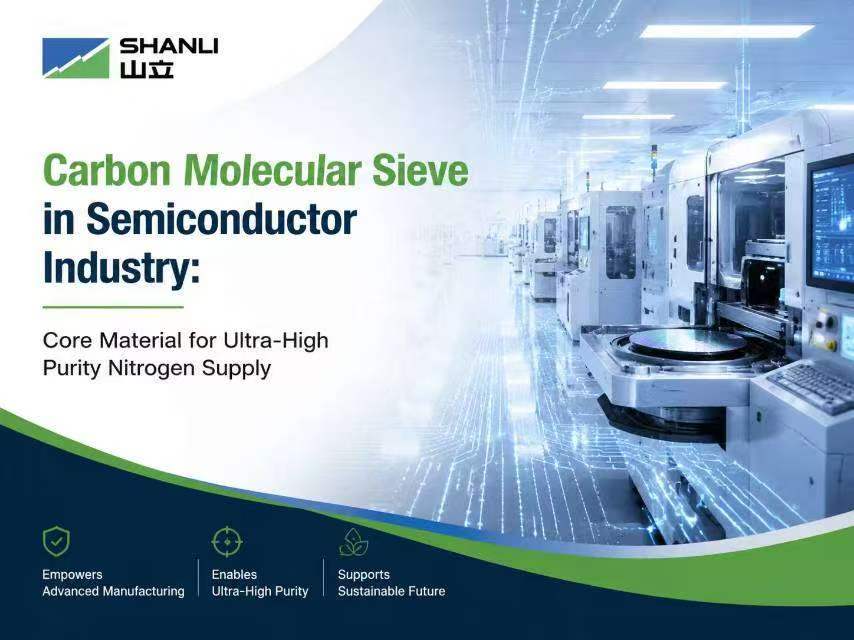
  • Carbon Molecular Sieve in Semiconductor Industry: Core Material for Ultra-High Purity Nitrogen Supply
    Carbon Molecular Sieve in Semiconductor Industry: Core Material for Ultra-High Purity Nitrogen Supply Jul 10, 2026
    Electronic and semiconductor manufacturing imposes extremely strict standards on environmental cleanliness and oxygen-free & moisture-free atmosphere. Trace oxygen, water vapor and impurities will trigger wafer oxidation, circuit defects and chip failure, severely reducing product yield. Massive, uninterrupted ultra-high-purity nitrogen is required as shielding gas, purging gas and carrier gas throughout all production processes.   On-site PSA nitrogen generation has become the mainstream gas supply solution for wafer fabs and packaging plants. Carbon Molecular Sieve (CMS) serves as the core adsorbent for accurate nitrogen-oxygen separation. Paired with post purification units, it supports stable supply of 6N ultra-high-purity nitrogen for advanced semiconductors. This article elaborates on the unique functions, application scenarios, exclusive industry advantages and selection criteria of CMS tailored to semiconductor manufacturing demands.     1.Why Ultra-High-Purity Nitrogen Is Mandatory for Semiconductor Production   Trace oxygen and moisture in air cause irreversible damage to precision semiconductor processes: Oxidation of silicon wafers, copper and aluminum circuits, leading to electric leakage and short circuits Premature exposure of photoresist, distorted line width and rough line edge roughness during lithography Residual fluorine contaminants inside plasma etching chambers, causing wafer surface defects Corrosion of ion beam equipment and ozone generates metal oxide particles that cause wafer surface scratches Oxidation, cold solder joints and poor reliability of electronic components during SMT soldering     Nitrogen is chemically inert and dry, isolating air to form a contamination-free production environment. Advanced semiconductor processes demand nitrogen purity of above 99.999% (5N and higher). Ordinary gas separation materials cannot maintain such high purity stably, high-grade special CMS is the optimal adsorbent to meet such strict purity requirements for on-site PSA nitrogen systems.     2.Core Application Scenarios of CMS PSA Nitrogen in Semiconductor Industrial Chain   2.1 Front-End Wafer Fabrication Lithography (EUV/DUV): Purge wafer stages and vacuum load locks to block oxygen and prevent premature photoresist exposure, guaranteeing nanoscale line width accuracy Dry Etching & Plasma Ashing: Chamber replacement and residual fluoride purging to avoid silicon wafer sidewall oxidation CVD & PVD Thin-Film Deposition: Carrier gas and furnace shielding gas to isolate air and prevent oxidation of copper/aluminum metal layers under high temperature Ion Implantation: Cool ion beam pipelines, suppress ozone formation and protect wafers and chamber components from corrosion Rapid Thermal Annealing: Dry nitrogen atmosphere to eliminate silicon substrate oxidation and stabilize doping uniformity   2.2 Packaging & Testing Wafer dicing, die attach and molding under nitrogen inert atmosphere to avoid bare chip oxidation Nitrogen shielding for reflow and wave soldering to reduce solder joint oxidation, voids and cold soldering Nitrogen-filled aging test chambers to isolate moisture and oxygen for stable electrical performance testing   2.3 Auxiliary Plant Scenarios Pipeline & equipment purging before maintenance to eliminate residual flammable specialty gas hazards Nitrogen blanketing for chemical and photoresist storage tanks to prevent oxidative deterioration Dry purging for cleanrooms and process chambers to maintain low dew point and dust-free standards     3.Unique Advantages of CMS PSA Nitrogen for Semiconductor Scenarios   3.1 Stable ultra-high purity output   Semiconductor-grade CMS with sub-angstrom precise pore control delivers outstanding oxygen separation selectivity. Nitrogen purity fluctuation remains minimal during long-term operation, consistently meeting 5N/6N standards for advanced processes and lowering wafer scrap rates.   3.2 Long-cycle stable performance for non-stop production   The material tolerates trace acidic and alkaline vapors and withstands high temperature within design limits, maintaining stable adsorption-desorption cycles even with trace corrosive impurities in compressed air. Its service life reaches 8–10 years under well-filtered clean compressed air supply, minimizing production shutdown losses caused by frequent material replacement.   3.3 Low dust generation to fit cleanroom standards   High mechanical strength and low-dust formulation avoid fine carbon powder release during adsorption, preventing particle contamination of wafers and precision equipment to meet Class 100/1000 (ISO 5/ISO 6) cleanroom specifications.   3.4 Energy-saving & low-carbon operation   Room-temperature pressure swing adsorption consumes far less energy than cryogenic separation. Low power consumption per cubic meter of nitrogen reduces electricity expenditure for large wafer fabs and supports low-carbon electronic manufacturing.     4.How CMS Quality Impacts Semiconductor Yield & Operation Costs   Semiconductor processes have an extremely low tolerance for gas impurities. CMS performance directly determines chip yield and equipment maintenance costs:   4.1 Superior Performance of Semiconductor-Grade High-Quality CMS Ultra-high oxygen-nitrogen separation efficiency with low air consumption to cut air compressor power costs Sustained 5N~6N ultra-high nitrogen purity without oxygen rebound over long operation cycles High particle compressive strength and anti-pulverization to avoid dust contamination in clean processes Resistance to oil stains and trace acid/alkali impurities to adapt to factory pre-filtered air sources Fast regeneration speed enables uninterrupted nitrogen supply via tower switching to match large-volume continuous production   4.2 Production Losses Caused by Inferior CMS Unqualified nitrogen purity with excessive oxygen leads to mass wafer oxidation and plummeting yield Elevated air consumption forces compressors to run at full load, increasing long-term electricity bills Pulverization generates carbon dust that blocks pipelines and pollutes wafers, raising equipment cleaning frequency Fast performance decay requires frequent production shutdowns for CMS replacement, disrupting 24/7 chip manufacturing     5.CMS Selection Standards Tailored for Electronics & Semiconductor Industry   Wafer fabs and packaging plants shall focus on industry-specific indicators during CMS procurement: Nitrogen purity standard required by different processes (5N for packaging / 6N for advanced lithography) 24-hour continuous large nitrogen flow matching total factory gas demand Anti-dust and high mechanical strength to meet cleanroom anti-contamination requirements Service life and purity stability under long cyclic pressure swing operation Low ash and low heavy metal leaching to comply with semiconductor dust-free and heavy-metal-free specifications Compatibility with large-flow industrial PSA nitrogen generators     Professional CMS suppliers can customize adsorbents for logic chips, memory chips, advanced packaging and panel manufacturing, balancing nitrogen production efficiency, purity and long-term comprehensive operating costs.     6.Conclusion   Ultra-high-purity nitrogen serves as the fundamental process gas covering wafer fabrication, packaging and testing in the semiconductor industry. As the core functional material of on-site PSA nitrogen generators, CMS enables low-cost, stable and continuous supply of ultra-high-purity nitrogen.     Premium semiconductor-specific CMS not only steadily delivers 5N~6N nitrogen to eliminate process defects induced by oxygen and moisture and boost chip yield, but also features low energy consumption, low dust and long service life to reduce overall factory expenditure on gas supply and equipment maintenance.     Whether for advanced lithography, thin-film deposition and ion implantation in front-end processes, or SMT soldering and chip packaging in back-end stages, selecting high-performance CMS matched to working conditions is a critical investment for electronic and semiconductor enterprises to guarantee product quality and realize stable mass production.
  • Carbon Molecular Sieve in Petroleum & Petrochemical Industry: The Core Material for Safe Production & Resource Recycling
    Carbon Molecular Sieve in Petroleum & Petrochemical Industry: The Core Material for Safe Production & Resource Recycling Jul 10, 2026
    Safe production and waste resource recycling are core demands of the petroleum and petrochemical sector. Oxygen in air triggers oil oxidation, spontaneous combustion, pipeline corrosion and catalyst deactivation across extraction, refining and chemical processing. High-purity nitrogen acts as a reliable inert barrier to eliminate these risks.   On-site PSA nitrogen systems have become mainstream for petrochemical plants, and Carbon Molecular Sieve (CMS) is the core adsorbent enabling on-demand nitrogen output. This article focuses on the unique application value of CMS in oil exploitation, refining safety and petrochemical gas recovery, as well as its industry-specific advantages.     1.How CMS Adapts to Petrochemical Nitrogen Production Needs   The adjustable nitrogen purity output of CMS PSA units can meet differentiated petrochemical standards, ranging from conventional purity to ultra-high purity up to 99.999% for high-risk refining links.   Compared with purchased liquid nitrogen, on-site CMS nitrogen production solves prominent industry pain points: Cut massive liquid nitrogen transportation and repeated procurement costs for large oilfield and refinery consumption Achieve 24-hour stable nitrogen supply to match continuous refining production lines Flexible flow adjustment to cope with variable nitrogen demand in oil injection, purging and sealing processes Eliminate safety risks brought by liquid nitrogen storage and tanker transportation     2.Core Application Scenarios of CMS PSA Nitrogen in Petroleum & Petrochemical Industry   2.1 Nitrogen Injection for Oilfield Production Enhancement   High-purity nitrogen produced by CMS equipment is injected into oil reservoirs to supplement formation pressure and displace residual crude oil, significantly raising the recovery rate of low-permeability and aging oilfields. It has replaced liquid nitrogen delivery as a cost-efficient conventional oil stimulation process.   2.2 Inert Isolation Safety Protection for Refining Units   Cracking, hydrogenation and catalytic reforming involve explosive, oxidizable materials. CMS nitrogen is used for tank nitrogen sealing, pipeline purging, equipment gas replacement and reactor shielding. It isolates air to prevent explosions, slow oil oxidation and extend catalyst service life, stabilizing long-term refining operation.   2.3 Petrochemical By-Product Gas Purification & Reuse   CMS separates impurities such as methane and carbon dioxide from refinery crude hydrogen, syngas and oilfield associated gas to extract high-purity hydrogen and methane for cyclic production. This cuts waste gas emissions, realizes resource recycling and lowers raw material procurement costs.   2.4 Oil & Gas Storage and Transportation Safety & Energy Conservation   Nitrogen sealing for refined oil tanks suppresses oil volatilization loss and avoids quality degradation caused by moisture intrusion. Nitrogen purging before equipment maintenance clears residual oil and gas inside facilities, eliminating construction safety hazards.     3.Unique Advantages of CMS PSA Nitrogen for Petrochemical Scenarios   3.1 Energy Saving & Cost Reduction   Room-temperature pressure swing operation consumes far less energy than cryogenic distillation and chemical absorption nitrogen making. Equipment structure is simple, with low daily operation and maintenance expenses suitable for large-volume long-cycle industrial use.   3.2 Outstanding Working Condition Adaptability   CMS features acid resistance, alkali resistance and high temperature resistance, maintaining stable separation performance under complex high-pressure, multi-impurity petrochemical environments.   3.3 Green & Low-Carbon Circular Operation   No chemical additives or secondary pollution are generated during gas separation. CMS can be regenerated and reused through pressure swing cycles with long service life, matching the industry’s low-carbon transformation goals.     4.Why CMS Quality Directly Impacts Petrochemical Operation Safety & Cost   Petrochemical production has strict standards for nitrogen purity and continuous supply, which entirely depend on CMS performance.   4.1 High-quality CMS delivers industry-specific superior performance: High nitrogen yield to satisfy large nitrogen consumption of oilfields and refineries Fast adsorption kinetics to support uninterrupted round-the-clock production Stable high nitrogen purity to meet strict safety inert protection requirements Strong mechanical strength and low dust generation, avoiding pipeline and valve blockage under complex petrochemical air sources Low air consumption to reduce long-term power expenditure Long service life to minimize production shutdown losses from frequent material replacement   4.2 Low-quality CMS will bring severe industrial losses: Substandard nitrogen purity fails safety protection standards and triggers production risks Higher air compression energy consumption increases plant electricity costs Short service cycle leads to frequent shutdown for CMS replacement Excessive dust blocks pipelines and valves, raising equipment maintenance frequency and costs     5.CMS Selection Standards Tailored for Petroleum & Petrochemical Industry   When selecting CMS for petrochemical PSA nitrogen generators, enterprises need to focus on industry-specific indicators: Nitrogen purity standard required by different working sections (oil injection, refining inert protection, gas purification) Large continuous nitrogen flow demand of full-scale production lines CMS adsorption capacity matching long-cycle uninterrupted operation Mechanical strength and anti-dust performance adapting to complex on-site air sources Service life under long-term pressure swing circulation Compatibility with large industrial PSA nitrogen making equipment     Professional CMS suppliers can customize adsorbent materials according to oilfield, refining and chemical working conditions, helping enterprises balance nitrogen production efficiency and long-term comprehensive operating costs.     6.Conclusion   Nitrogen inert protection and waste gas recycling are indispensable supporting technologies for the whole petroleum and petrochemical industrial chain. As the core adsorbent of PSA nitrogen generators, CMS enables low-cost, stable and continuous on-site high-purity nitrogen supply tailored to industrial heavy-load production.     Premium CMS not only guarantees nitrogen purity to satisfy stringent petrochemical safety specifications, but also reduces energy consumption, maintenance frequency and overall production costs, improving the stability of nitrogen supply systems for oil and chemical enterprises.     Whether for reservoir nitrogen injection, refining equipment explosion-proof isolation, by-product gas recycling or oil storage anti-volatilization protection, selecting matched high-performance CMS is a key investment for enterprises to achieve safe production, energy conservation and low-carbon upgrading.
  • Carbon Molecular Sieve for Welding Nitrogen Protection: Improving Weld Quality with PSA Nitrogen
    Carbon Molecular Sieve for Welding Nitrogen Protection: Improving Weld Quality with PSA Nitrogen Jul 02, 2026
    Nitrogen is widely used as a shielding gas in modern metal fabrication and welding processes. Stable, high-purity nitrogen protects molten metal from oxidation, resulting in cleaner welds and improved mechanical performance.   Today, more manufacturers are replacing bottled nitrogen with on-site PSA nitrogen generation systems powered by Carbon Molecular Sieve (CMS), reducing production costs while ensuring a continuous gas supply. This article explains how Carbon Molecular Sieve supports nitrogen generation for welding applications.     1.Why Nitrogen Is Important in Welding During welding, molten metal reacts quickly with oxygen and moisture in the air.   Without adequate shielding, defects may occur, including: Oxidation  Porosity  Discoloration  Reduced corrosion resistance  Lower weld strength  Nitrogen shielding creates an inert atmosphere around the weld pool, minimizing contamination.     2. Welding Processes Using Nitrogen.   Nitrogen is commonly applied in: Laser Welding Nitrogen protects the weld zone while improving weld appearance. TIG Welding Used for stainless steel and certain specialty alloys requiring oxidation protection. Plasma Cutting Nitrogen improves cut quality and reduces oxidation. Brazing Provides a clean protective atmosphere for joining metals. Stainless Steel Fabrication Helps maintain corrosion resistance and surface finish.     3.How Carbon Molecular Sieve Generates Nitrogen Carbon Molecular Sieve separates oxygen from compressed air using Pressure Swing Adsorption (PSA).   The process includes: Air compression  Air purification  Oxygen adsorption by CMS  Nitrogen collection  Continuous regeneration  This cyclic process provides uninterrupted nitrogen production without chemical reactions.     4.Advantages of PSA Nitrogen in Welding   4.1 Lower Operating Costs On-site generation significantly reduces gas purchasing expenses.   4.2 Continuous Supply Production is no longer dependent on cylinder deliveries.   4.3 Stable Nitrogen Purity PSA systems can provide nitrogen purity from 95% to 99.999%, depending on process requirements.   4.4 Improved Production Efficiency No downtime for cylinder replacement.   4.5 Enhanced Safety Eliminates risks associated with transporting and storing high-pressure cylinders.     5.Why High-Quality Carbon Molecular Sieve Matters   5.1 The CMS directly determines: Nitrogen output  Nitrogen purity  Air consumption  Energy efficiency  Equipment lifespan    5.2 Premium Carbon Molecular Sieve offers: High adsorption capacity  Fast oxygen adsorption  Excellent wear resistance  Stable pressure performance  Long operating life  These characteristics help manufacturers reduce total operating costs while maintaining consistent welding quality.     6.Industries Using PSA Nitrogen for Welding   Industries benefiting from PSA nitrogen generation include: Automotive manufacturing  Stainless steel fabrication  Aerospace  Metal furniture  Pressure vessel manufacturing  Electronics production  Precision metal processing  As production automation increases, PSA nitrogen systems have become an increasingly popular solution across these industries.     7.Conclusion Reliable nitrogen protection is essential for achieving high-quality welds and efficient manufacturing. Carbon Molecular Sieve serves as the core separation material in PSA nitrogen generators, enabling continuous production of high-purity nitrogen while reducing operating costs.   For manufacturers seeking stable nitrogen supply, energy efficiency, and long-term reliability, selecting high-quality Carbon Molecular Sieve is a key factor in maximizing the performance of PSA nitrogen systems.  
1 2 3 4

A total of4pages

Qianjiang Industrial Zone, Guichi district chizhou city, Anhui province, China
Quick Links
Subscribe

Please Read On, Stay Posted, Subscribe, And We Welcome You To Tell Us What You Think.

submit
f

Copyright @ 2026 Chizhou Shanli Molecular Sieve Co., Ltd. All Rights Reserved. Network Supported

blog Sitemap Xml Privacy Policy

leave a message

leave a message
If you are interested in our products and want to know more details,please leave a message here,we will reply you as soon as we can.
submit

home

products

Contact Us

Start a Conversation

Hi! Click one of our members below to chat on