Home

Blog

Blog

  • Fluoride Removal Principle of Activated Alumina Ceramic Balls
    Fluoride Removal Principle of Activated Alumina Ceramic Balls Dec 26, 2025
    Activated alumina ceramic balls feature a porous structure and large specific surface area, enabling them to effectively adsorb fluoride ions in water. Their fluoride removal mechanism mainly consists of the following two aspects:   1. Adsorption The porous structure of activated alumina ceramic balls provides an extremely large specific surface area, which means that per unit mass of alumina ceramic balls has a vast surface area and can offer abundant adsorption sites for fluoride ions. During the water treatment process, when the water containing fluoride ions flows through the activated alumina ceramic ball layer, the fluoride ions are firmly adsorbed on the surface under the action of adsorption force from the alumina ceramic ball surface. This adsorption is not only rapid but also highly efficient, allowing activated alumina ceramic balls to quickly remove fluoride ions from water. In addition, the pore size distribution of activated alumina ceramic balls plays a crucial role in fluoride removal efficiency. A proper pore size can ensure that fluoride ions smoothly enter the interior of the pores, thereby enhancing the adsorption efficiency. Studies have shown that the optimal fluoride removal effect is achieved when the pore size of activated alumina ceramic balls ranges from 2 to 10 nanometers.   2. Chemical Reaction In addition to adsorption, the active sites on the surface of activated alumina ceramic balls can also react chemically with fluoride ions to form stable compounds. Such chemical reactions include redox reactions, coordination reactions, etc. For instance, the aluminum ions on the surface of alumina ceramic balls can combine with fluoride ions to form stable aluminum fluoride complexes. These complexes are insoluble in water, thus realizing the removal of fluoride ions.   In practical applications, the fluoride removal efficiency of activated alumina ceramic balls is affected by various factors, such as water pH value, temperature, and fluoride ion concentration. Under appropriate conditions, activated alumina ceramic balls can efficiently remove fluoride ions from water, providing people with safe and healthy drinking water.   However, activated alumina ceramic balls also have certain limitations in the fluoride removal process. For example, when the fluoride ion concentration in water is excessively high, the adsorption capacity of activated alumina ceramic balls may become saturated rapidly, resulting in a decline in fluoride removal efficiency. In addition, the regeneration and recycling of activated alumina ceramic balls are also issues that need to be considered. In practical applications, to improve the fluoride removal efficiency of activated alumina ceramic balls, appropriate modifications are usually required, such as loading metal ions and preparing composite materials.   In conclusion, as a high-efficiency fluoride removal material, activated alumina ceramic balls have broad application prospects in water treatment and industrial fields. Through in-depth research and continuous optimization of the fluoride removal principle, we are expected to further improve the fluoride removal efficiency of activated alumina ceramic balls, making greater contributions to environmental protection and water resource utilization.   If you want to get more information about us,you can click www.carbon-cms.com.
  • Technical Requirements for Carbon Molecular Sieves in Nitrogen Generators
    Technical Requirements for Carbon Molecular Sieves in Nitrogen Generators Dec 15, 2025
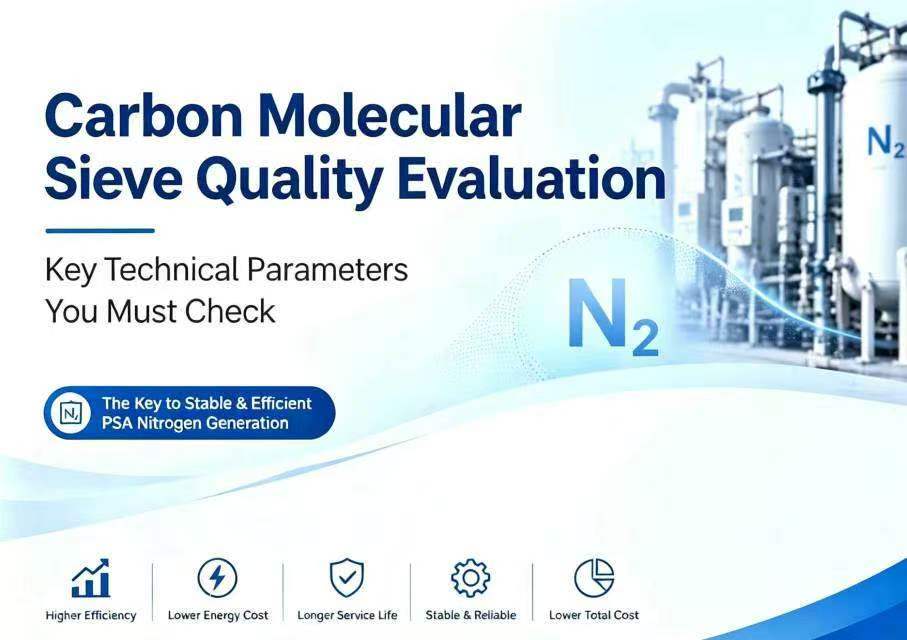
    1.Stable adsorption performance. The carbon molecular sieve of a nitrogen generator must have excellent selective adsorption capacity, and its adsorption performance and selectivity must not undergo significant changes during long-term operation.   2.Uniform quality and consistent particle size. The carbon molecular sieve of a nitrogen generator needs to ensure uniform particle size, so as to guarantee the uniform transmission of gas molecules in the molecular sieve channels and avoid phenomena such as "streamline effect" and "hot spot effect".   3.Large specific surface area and uniform pore size distribution. The carbon molecular sieve of a nitrogen generator has a large specific surface area and reasonable pore size distribution, so as to increase adsorption capacity and improve adsorption rate.   4.Strong heat resistance and chemical resistance. The carbon molecular sieve of a nitrogen generator needs to have certain heat resistance and chemical resistance, and be able to be used for a long time in environments with high temperature, high pressure and harmful gases.   5.Low cost and high stability. The carbon molecular sieve of a nitrogen generator needs to be relatively low in price, high in durability and have long-term stability to meet the requirements of industrial applications.   For more information ,please click www.carbon-cms.com.
  • Catalytic properties of molecular sieves
    Catalytic properties of molecular sieves Dec 11, 2025
    Molecular sieves possess unique and excellent catalytic properties, which are mainly manifested in the following aspects:   Unique and uniform pore structure: Molecular sieves have regular and uniform intracrystalline channels, with pore sizes close to molecular dimensions. This structure makes the catalytic performance of molecular sieves change significantly with the geometric sizes of reactant molecules, product molecules, or reaction intermediates. For example, in certain reactions, only molecules with a kinetic diameter smaller than the pore size of the molecular sieve can enter the channels and be catalyzed, thereby achieving selective control of the reaction.   Large specific surface area: It provides abundant active sites for catalytic reactions, increases the contact opportunities between reactants and catalysts, and improves reaction efficiency. A large number of surface active sites can adsorb and activate reactant molecules, promoting the progress of chemical reactions.   Strong acid centers and redox active centers: These enable molecular sieves to exert catalytic effects in various reactions. Acid centers can facilitate acid-base catalytic reactions, while redox active centers contribute to the occurrence of redox reactions.   Strong polarizable Coulomb field inside the pores: It can polarize reactant molecules and optimize reaction pathways, thereby improving the activity and selectivity of catalytic reactions. This polarization effect helps activate reactant molecules and reduce the activation energy of the reaction.   In conclusion, the catalytic properties of molecular sieves enable them to play an important role in numerous industrial catalytic processes, providing strong support for the development of chemical, petroleum and other fields. Any interestes or questions ,welcome to visit us at www.carbon-cms.com.
  • Functions of Activated Alumina
    Functions of Activated Alumina Dec 09, 2025
    Owing to its advantages of large specific surface area, adjustable pore structure, excellent adsorption performance, surface acidity and good thermal stability, activated alumina is widely used as an adsorbent, water purifier, catalyst and catalyst support in fields such as pharmaceuticals, chemical engineering, metallurgy, water purification, chemical analysis and waste gas treatment. It plays a particularly important role in reaction processes including petroleum hydrocracking, hydrofining, hydroreforming, dehydrogenation and automobile exhaust purification.   1.Applications of Activated Alumina in the Adsorption Field As an adsorbent constitutes one of the primary applications of activated alumina, which is mainly attributed to its numerous favorable properties such as large specific surface area, rational pore structure, excellent physical properties and good chemical stability. Its major industrial applications include gas drying, liquid drying, water purification treatment, and selective adsorption in the petroleum industry.   2.Applications in Water Purification The application of activated alumina in the water purification field has been developing rapidly. Its water treatment applications mainly focus on fluoride removal, decolorization, odor elimination and phosphate removal.   3.Applications in Gas Drying Owing to its strong affinity for water, activated alumina exhibits excellent performance in drying moisture from gases. It is capable of drying more than twenty types of gases, including acetylene, hydrogen, oxygen, air and nitrogen.   4.Applications in Liquid Drying Liquid drying is far more complex than gas drying, and the requirements for desiccants are relatively higher. First, no chemical reactions shall occur between the components of the liquid, or between the liquid and the adsorbent during their contact. Second, the substances adsorbed during liquid drying must be removable via rinsing during the regeneration process. At present, the liquids proven to be dryable by activated alumina include aromatic hydrocarbons, high-molecular olefins, gasoline, kerosene and the like. If you are interested in our products and want to know more details, you can click www.carbon-cms.com.
  • What is activated alumina?
    What is activated alumina? Dec 05, 2025
    Activated alumina, also known as activated bauxite, is a porous and highly dispersed solid material widely used in industrial fields.   Basic Information The chemical formula of activated alumina is Al₂O₃. It is generally white powder or white spherical porous particles with a density of 3.9-4.0 g/cm³, a melting point of 2050℃, and a boiling point of 2980℃. It is insoluble in water and ethanol.   Performance Characteristics Large Specific Surface Area: Features a well-developed pore structure with a specific surface area of 200-400 m²/g, providing abundant active sites for adsorption and catalytic reactions. Strong Adsorption Capacity: Exhibits high adsorption capacity for water vapor, gases, and organic compounds. The water vapor adsorption capacity can reach 20%-30% (by weight) with a dew point as low as -70℃, making it the preferred material for deep drying of compressed air and other gases. Excellent Thermal Stability: Maintains structural stability at high temperatures below 800℃ with a low thermal expansion coefficient, suitable for high-temperature catalytic or regeneration processes. High Chemical Stability: Chemically stable in the pH range of 4-9, resistant to acid and alkali corrosion, and tolerant to toxic substances such as sulfides and chlorides. It has no risk of heavy metal leaching and complies with environmental protection standards. High Mechanical Strength: Spherical particles have a smooth surface and high mechanical strength, maintaining their original shape without swelling or cracking after water absorption. This facilitates reactor filling and reduces pressure drop. For more information on activated alumina, please visit www.carbon-cms.com.
  • Differences between 3A, 4A, and 5A Molecular Sieves
    Differences between 3A, 4A, and 5A Molecular Sieves Nov 27, 2025
    一、Differences in Pore Size   Pore size varies among molecular sieves, leading to differences in their filtration and separation capabilities. Simply put: 3A molecular sieves can only adsorb molecules smaller than 0.3 nanometers (nm); 4A molecular sieves require adsorbed molecules to be less than 0.4 nm; The same principle applies to 5A molecular sieves (adsorbing molecules < 0.5 nm). When used as a desiccant, a molecular sieve can adsorb at least 21% of its own weight in moisture.   二、Differences in Applications   3A Molecular Sieves are mainly used for drying petroleum cracking gas, olefins, refinery gas, and oilfield gas. They also serve as desiccants in industries such as chemicals, pharmaceuticals, and insulated glass. Typical applications include: drying liquids (e.g., ethanol), air drying in insulated glass, and refrigerant drying. 4A Molecular Sieves are primarily used for deep drying of gases and liquids such as air, natural gas, alkanes, and refrigerants; production and purification of argon; static drying of pharmaceutical packaging, electronic components, and perishable substances; and as dehydrating agents in paints, fuels, and coatings. 5A Molecular Sieves are mainly used for separating normal and isoparaffins; deep drying and purification of gases and liquids; separation of oxygen and nitrogen; and desulfurization of petroleum and liquefied petroleum gas (LPG). They can also act as adsorbents in dewaxing processes using steam as the desorbent.   For more information on molecular sieves, please visit www.carbon-cms.com.    
  • Molecular sieves possess three core properties
    Molecular sieves possess three core properties Nov 18, 2025
    1.Molecular sieving performance Molecular sieves feature an extremely uniform pore size distribution. Only substances with molecular diameters smaller than the pore size can enter the internal cavities of the molecular sieve crystals. For instance, 3A molecular sieves have a pore size of approximately 0.3 nanometers, allowing only water molecules (about 0.27 nanometers in diameter) to pass through while repelling larger molecules (such as propane, around 0.43 nanometers). 5A molecular sieves, with a pore size of roughly 0.5 nanometers, are used for separating oxygen (0.34 nanometers) and nitrogen (0.36 nanometers). This precise "molecular screening" capability makes them key materials for separation and purification processes.   2.Adsorption performance Even if molecules are smaller than the pore size, molecular sieves preferentially adsorb polar molecules (such as water and carbon dioxide) and unsaturated molecules (such as alkenes) through van der Waals forces or hydrogen bonds on the pore surface. This further enhances sieving precision. For example, nitrogen production using carbon molecular sieves achieves efficient nitrogen separation by preferentially adsorbing oxygen (which has slightly stronger polarity).   3.Catalytic performance The pore structure of molecular sieves serves as "microreactors" for chemical reactions. The acidic sites on their surface (generated by the charge balance between the negative charge of aluminum-oxygen tetrahedra and cations) can catalyze carbocation-type reactions. For instance, Y-type molecular sieves, as petroleum cracking catalysts, can crack heavy oil into light fuels like gasoline. They are currently one of the most widely used catalysts in the petroleum refining industry.   Any interestes or questions ,welcome to visit us at www.carbon-cms.com.
  • what is molecular sieve?
    what is molecular sieve? Nov 13, 2025
    Molecular sieve, often called zeolites or zeolite molecular sieves, are classically defined as "aluminosilicates with a pore (channel) framework structure that can be occupied by many large ions and water".    According to the traditional definition, molecular sieves are solid adsorbents or catalysts with a uniform structure that can separate or selectively react molecules of different sizes.    In a narrow sense, molecular sieves are crystalline silicates or aluminosilicates, which are connected by silicon-oxygen tetrahedra or aluminum-oxygen tetrahedra through oxygen bridges to form a system of channels and voids, thus having the characteristics of sieving molecules.    Basically, it can be divided into several types of A, X, Y, M and ZSM, and researchers often attribute it to the solid acid category.   If you are interested in our products and want to know more details, you can click www.carbon-cms.com.  
  • What is carbon molecular sieve?
    What is carbon molecular sieve? Nov 10, 2025
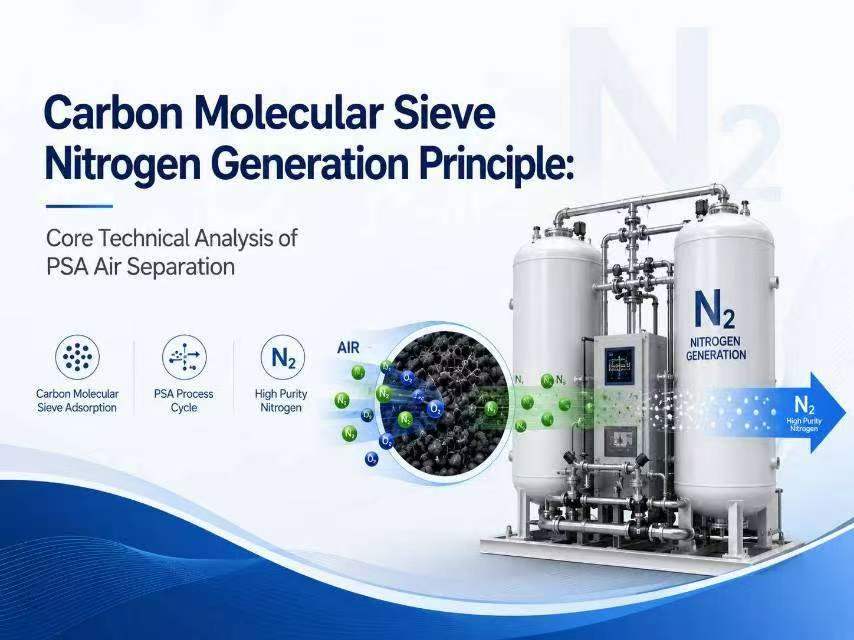
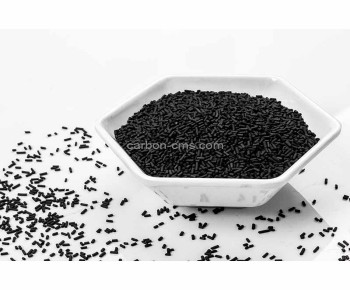
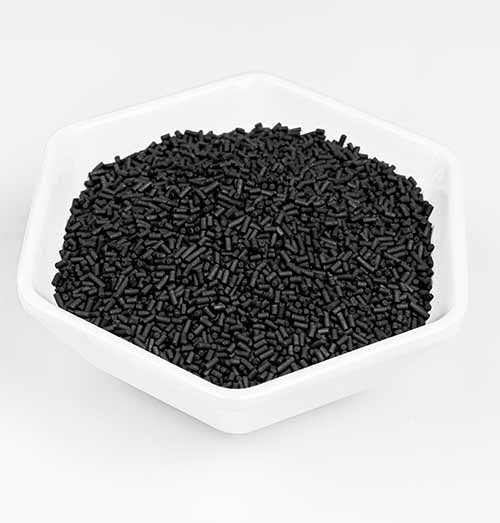
    Carbon molecular sieve is a new type of adsorbent developed in the 1970s. It is a kind of excellent non-polar carbon-based cellulose material.   The main component of carbon molecular sieve is elemental carbon, and the appearance is a black columnar solid. It contains a large number of micropores with a diameter of 4 angstroms, the micropores have a strong instantaneous affinity for oxygen molecules and can be used to separate oxygen and nitrogen in the air.Nitrogen adopts a normal temperature and low pressure nitrogen production process, which has the advantages of less investment cost, faster nitrogen production speed, and lower nitrogen cost than the traditional cryogenic high pressure nitrogen production process. Therefore, it is currently the preferred pressure swing adsorption (PSA) nitrogen-rich adsorbent for air separation in the engineering industry.   Carbon molecular sieve  is used in the chemical industry, oil and gas industry, electronics industry, food industry, coal industry, pharmaceutical industry, cable industry, and metal It is widely used in heat treatment, transportation and storage. For more information on carbon molecular sieves, please visit www.carbon-cms.com.  
  • Innovation in Hot Water Tracing: An Excellent Solution for Long-Distance Tar Transportation
    Innovation in Hot Water Tracing: An Excellent Solution for Long-Distance Tar Transportation Sep 10, 2025
    In the carbon molecular production field, tar, as a key raw material, faces great challenges in long-distance transportation in winter due to poor low-temperature fluidity. Traditional electric heat tracing is commonly used, but its energy consumption and safety shortcomings are obvious. After in-depth exploration, our company independently designed a hot water tracing system, which provides an excellent solution to the problem of tar transportation.   This hot water tracing system is an efficient, energy-saving, and safe choice for long-distance tar transportation. By utilizing the factory's heat source and with the optimized design of aluminum pipes and thermal insulation sleeves, it overcomes the problem of difficult low-temperature transportation of tar and has achieved remarkable results in terms of energy and safety. This achievement helps enterprises gain a competitive advantage and also provides valuable references for peers, promoting industrial technological progress and sustainable development. In the future, our company will continue to innovate, overcome more industrial technical difficulties, and make unremitting efforts for the progress of the industry.   For more information ,please click www.carbon-cms.com.                                                                                                                                      
  • "Three Systems" Certification of Quality, Environment and Occupational Health and Safety Promotes High-Quality Development of Enterprises
    "Three Systems" Certification of Quality, Environment and Occupational Health and Safety Promotes High-Quality Development of Enterprises Sep 01, 2025
    Our company underwent a strict audit and certification conducted by the CQM (China Quality Mark) Certification Group, based on the three major system standards: ISO 9001 Quality Management System, ISO 14001 Environmental Management System, and ISO 45001 Occupational Health and Safety Management,the company successfully passed the "Three Systems" certification audit.This audit served as an authoritative examination of the company's operational performance since implementing the three system managements, signifying that the company has reached a new level in enhancing its management capabilities and social responsibility awareness.   Shanli initiated ISO Quality and Environment management systems in 2016 and has maintained ISO system certification for 9 consecutive years. In 2023, a resolution by the company's General Management Office led to the introduction of Occupational Health and Safety system management. This involved a comprehensive review of existing management systems and systematic self-inspection and improvement against ISO standards. The company actively promoted energy conservation and emission reduction efforts, optimized waste disposal, rationally planned resource utilization, and fostered a green and environmentally friendly production environment. It established safe operating procedures and emergency plans, improved occupational hazard protection measures, regularly organized safety training and drills, implemented strict quality control processes, and conducted regular internal audits and management reviews, all aimed at fully enhancing the company's overall management capability and service level.   If you wanto to get more information about us,you can click www.carbon-cms.com.        
1 2

A total of2pages

Qianjiang Industrial Zone, Guichi district chizhou city, Anhui province, China
Quick Links
Subscribe

Please Read On, Stay Posted, Subscribe, And We Welcome You To Tell Us What You Think.

submit
f

Copyright @ 2026 Chizhou Shanli Molecular Sieve Co., Ltd. All Rights Reserved. Network Supported

blog Sitemap Xml Privacy Policy

leave a message

leave a message
If you are interested in our products and want to know more details,please leave a message here,we will reply you as soon as we can.
submit

home

products

Contact Us